Filter Results
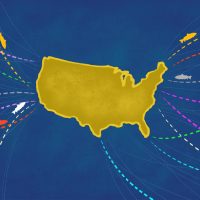
Global trade is much more prominent in recent years, and related statistics have been used to justify many policy positions. For seafood trade, though, it is quite difficult to piece together how much of the seafood eaten in the US was originally caught in the US. A new study now examines these complexities, finding that about 62-65% of seafood comes from foreign sources, much less than the widely reported 90% that is often cited.
Read more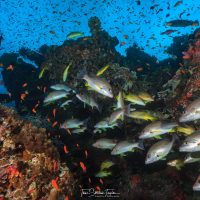
Coral reefs typically evoke clear, turquoise waters and a staggering number of colorful fishes. But what supports such an abundance of life?
Read more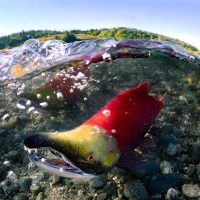
Chemical signatures imprinted on tiny stones that form inside the ears of fish show that two of Alaska’s most productive salmon populations, and the fisheries they support, depend on the entire watershed.
Read more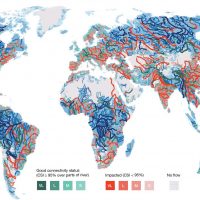
Rivers are crucial components of human well-being, contributing water, food, hydroelectric power, and transport for millennia. Yet an estimated 2.8 million dams now divide up rivers world-wide, threatening healthy river ecosystems and reducing biodiversity in stream systems, in addition to impacts on inland fisheries that supply protein to 158 million people worldwide. Now, the first global assessment of free-flowing rivers has just been published in the journal Nature.
Read moreFishery cooperatives are groups of harvesters that band together to jointly fish a pooled quota. They can be set up in a variety of ways, but generally are governed by agreements among members, as well as agreements with regulators that affect all members of the cooperative. One form this may take is to have the participants be “jointly and severally liable” for staying within the catch quota limits for that cooperative; in other words, the regulator can halt the fishing of all members within a cooperative if the catches for that cooperative exceed quota limits, even if the overage was the fault of just a single member.
Read more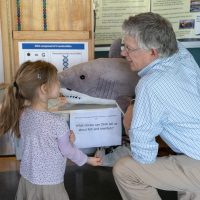
On May 4th, the University of Washington held its second annual Aquatic Science Open House. Seattle-area families, students, and teachers were invited to explore the institution’s marine and freshwater science programs and interact with researchers. The event was organized by the Students Explore Aquatic Sciences (SEAS) outreach group based in the School of Aquatic and Fishery Sciences (SAFS) and the Academic and Recreational Graduate Oceanographers (ARGO) outreach group based in the School of Oceanography.
Read more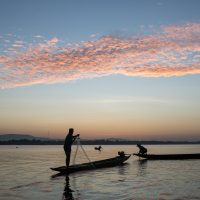
Just over one-third of the world’s 246 longest rivers remain free-flowing, according to a new study published May 8 in Nature. Dams and reservoirs are drastically reducing the diverse benefits that healthy rivers provide to people and nature across the globe.
Read more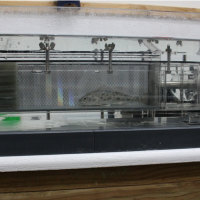
The Deepwater Horizon oil spill, starting 10 April 2010 and lasting until 15 July that year, was the largest in US waters in history. This highly impactful event offers lessons that can be used to train the next generation of marine scientists. In a pair of new articles in Current: The Journal of Marine Education a group of authors that include SAFS communications specialist Dan DiNicola outlines ways in which marine educators can bring the story of the oil spill to life, including assessing the impact of oil on fish swimming behavior and vision using “fish treadmills” with the aid of an online virtual laboratory; and highlighting new technological advances that came out of research on the effects of the oil spill.
Read more
Mapping the distribution of mobile species is a long-standing problem in ecology. For many species, there are multiple types of data available, roughly categorized into surveys of many individuals at a snapshot period in time (e.g. a systematic spatial survey recording all individuals at a point in time) compared to tracking devices that follow individuals over time as they move through space (e.g.
Read more
Complex fisheries models are like weather forecasts for fish populations: they gather together all the available data about fish trends in numbers over time, numbers at each age, and other information, and then predict the level of sustainable catch that can be taken from the population. Over time, as computing power has grown, these models have also become more complex, and run time has remained consistently high.
Read more