Filter Results
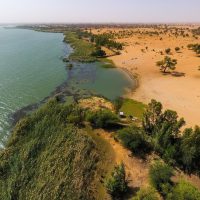
A team led by the University of Washington and Stanford University has discovered clues in the environment that help identify transmission hotspots for schistosomiasis, a parasitic disease that is second only to malaria in its global health impact. The research, publishing the week of Oct. 28 in the Proceedings of the National Academy of Sciences, uses rigorous field sampling and aerial images to precisely map communities that are at greatest risk for schistosomiasis.
Read more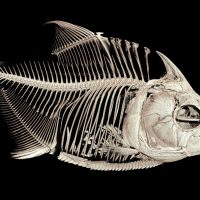
With the help of new technologies, a team led by the University of Washington has confirmed that piranhas — and their plant-eating cousins, pacus — do in fact lose and regrow all the teeth on one side of their face multiple times throughout their lives. How they do it may help explain why the fish go to such efforts to replace their teeth.
Read more
Ethen Whattam, an undergraduate student in the UW School of Aquatic and Fishery Sciences, recently returned from India, where he spent 10 months studying as a recipient of the Boren Scholarship. Whattam, along with the other student awardees, was given the opportunity to immerse himself in the Hindi language and culture, while researching the country’s complex relationship with water.
Read more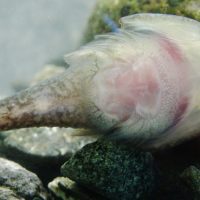
A University of Washington team inspired by the clingfish’s suction power set out to develop an artificial suction cup that borrows from nature’s design. Their prototype, described in a paper published Sept. 9 in the journal Philosophical Transactions of the Royal Society B, actually performed better than the clingfish.
Read more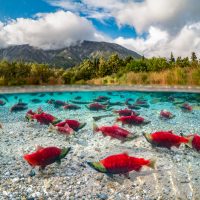
It’s hard to think small in Alaska. The largest of the United States is home to North America’s highest mountain range. It’s a place where undammed rivers run more than 1000 kilometers, glaciers collapse into the ocean, and polar bears roam. Daniel Schindler, however, is here hunting for something the size of a grain of rice.
Read more
Please join us in congratulating Sarah Converse who will be receiving the Department of the Interior’s Distinguished Service Award in Washington D.C. on September 12th.
Read more
SAFS is excited to announce that José M. Guzmán has been appointed our newest full-time lecturer.
Read more
SAFS is excited to announce that Camrin Braun will be joining us as our newest Assistant Professor.
Camrin has worked on movement ecology of top predators and biophysical interactions in the ocean for nearly a decade. He recently finished his PhD in the MIT-WHOI Joint Program in Oceanography and has been working as a Postdoctoral Research Scientist in the Air-Sea Interaction and Remote Sensing Department at the Applied Physics Lab (APL-UW).
Read more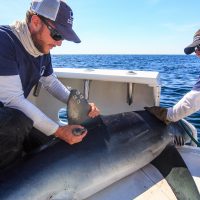
Last year, researchers at Woods Hole Oceanographic Institution (WHOI) and the Applied Physics Lab at the University of Washington (UW) discovered that when white sharks are ready to feast, they ride large, swirling ocean currents known as eddies to fast-track their way to the ocean twilight zone—a layer of the ocean between 200 and 1000 meters deep (656 to 3280 feet) containing the largest fish biomass on Earth. Now, according to a new study in Proceedings of the National Academy of Sciences (PNAS), scientists are seeing a similar activity with blue sharks, which dive through these natural, spinning tunnels at mealtime. The eddies draw warm water deep into the twilight zone where temperatures are normally considerably colder, allowing blue sharks to forage across areas of the open ocean that are often characterized by low prey abundance in surface waters.
Read more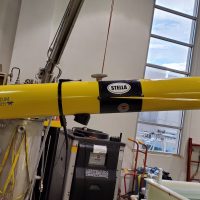
A multi-institution team consisting of the University of Washington School of Aquatic and Fishery Sciences (UW SAFS) Professor John Horne will deploy experimental technology next week to explore the deep scattering layers of the ocean. In addition to Horne, the UW team includes Ross Hytnen Jr. and summer intern Raymond Surya (a JISAO intern from the University of Michigan). Horne’s lab at SAFS uses active acoustic technologies to count and characterize aquatic organism distributions and dynamics throughout the world.
Read more