Filter Results
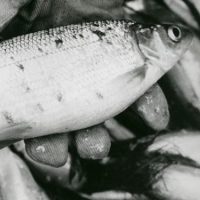
The global pandemic is hurting the seafood industry, and American fishmongers may flounder without more government aid, according to the largest study of COVID-19’s impacts on U.S. fisheries. The new study, published Nov. 23 in the journal Fish and Fisheries, found that monthly fresh seafood exports declined up to 43% compared to last year, while monthly imports fell up to 37%, and catches dropped 40% in some months.
Read more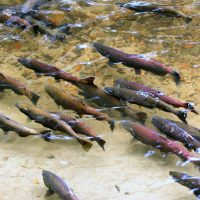
A new University of Washington study has found that Chinook salmon seem to use collective navigation and interact socially to help each other find fish ladders at dams.
Read more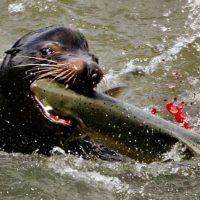
A new University of Washington and NOAA Fisheries study found that sea lions have the largest negative effect on early-arriving endangered Chinook salmon in the lower Columbia River. The results of this study will publish Oct. 18 in the Journal of Applied Ecology.
Read more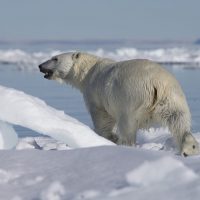
The small subpopulation of polar bears in Kane Basin were doing better, on average, in recent years than in the 1990s. The bears are experiencing short-term benefits from thinning and shrinking multiyear sea ice that allows more sunlight to reach the ocean surface, which makes the system more ecologically productive.
Read more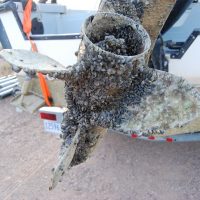
A new University of Washington study uses passive data from a fishing technology company to model the movement of anglers and predict where aquatic invasive species may be spreading.
Read more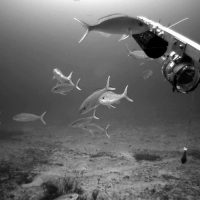
The Pacific Islands Fisheries Science Center is launching a new citizen science project called OceanEYEs and is seeking volunteers to help find Deep 7 bottomfish in underwater videos.
Read more
Last quarter we explored SAFS’ vast research network throughout the world’s arctic, subarctic, and tropical regions. We now bring the focus back to Washington State and the fascinating science coming from our own backyard. Delve into some research highlights from our faculty, staff, and students with an interactive map taking you on a virtual tour all around our state.
Read more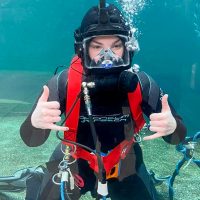
Less than two months after taking my last final exam as a SAFS undergrad, I packed two small duffel bags and left Washington. I flew across the country to Charleston, South Carolina, to start a dive internship with the South Carolina Aquarium.
Read more
John Connelly, the President of NFI since 2003, has helped oversee the organization’s generosity to SAFS. Read a digital conversation between John and Danna Bowers (Advancement, College of the Environment).
Read more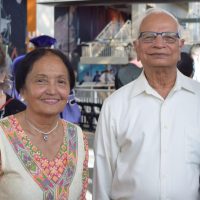
Drs. Usha and S. Rao Varanasi are longtime supporters of SAFS and also benefactors to many other academic units across the UW. Usha chatted with Andrew Storms (Advancement, College of the Environment) about her and Rao’s commitment to the education of students at SAFS and the UW.
Read more