Filter Results
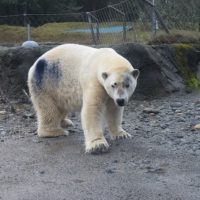
To find the missing gap in the understanding of hair growth on polar bears, researchers are dyeing parts of their fur with colored dots so they can track the progress visually.
Read more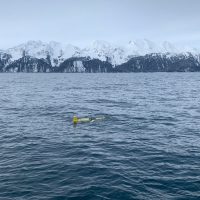
The echosounder-equipped, autonomous underwater glider, Gretel, was launched from the mouth of Resurrection Bay in the northern Gulf of Alaska. After technical adjustments, Gretel will sample the GAK1 line and proceed southeast to rendezvous with the US vessel, the NOAA research vessel Bell M Shimada participating in the 2022 Pan-Pacific International Year of the Salmon High Seas Expedition.
Read more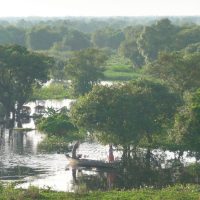
Tropical rivers like the Mekong uniquely overflow their banks and flood for much of the year. These regular flood events create the chemical preconditions needed for methanogenesis to occur in waterlogged soils. A new study led by the University of Washington found that anaerobic processes occurring on floodplains of the Tonle Sap, the largest lake in Southeast Asia, are important contributors of the carbon dioxide that is dissolved in surface waters.
Read more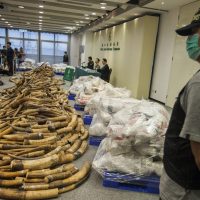
Across the globe, endangered species are at risk for illegal poaching. African elephants are sought out for their ivory, rhinoceros for their singular horns, and armadillo-like pangolins for their protective, brittle scales. Add to that list valuable and environmentally sensitive trees illegally harvested throughout the world where entire ecosystems are being deforested and illegal, unreported and unregulated fishing that is devastating oceans. These illicit markets, estimated at $1 trillion annually, cause enormous environmental impacts and have the potential to unleash new, deadly pathogens.
Read more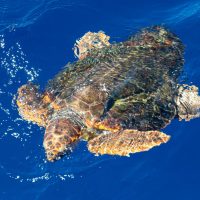
Many nations are calling for protection of 30% of the world’s oceans by 2030 from some or all types of exploitation, including fishing. Building off this proposal, a new analysis led by the University of Washington looks at how effective fishing closures are at reducing accidental catch. Researchers found that permanent marine protected areas are a relatively inefficient way to protect marine biodiversity that is accidentally caught in fisheries. Dynamic ocean management — changing the pattern of closures as accidental catch hotspots shift — is much more effective.
Read more
Professor Chris Anderson’s new research published in Frontiers in Marine Science explores the different social and economic impacts and pathways through which the MSC Certification Program can lead to sustainable outcomes for our oceans.
Read more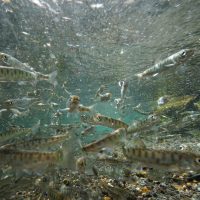
“We’re basically asking if wild fish feel ‘peer pressure’ from hatchery fish to migrate,” said Dr. Berdahl. “Hatchery production is common throughout the Pacific Northwest, so the findings could improve salmon conservation broadly.”
Read more
Filmed over the course of the summer and fall of 2021, Jason Ching and Professor Daniel Schindler from the University of Washington’s Alaska Salmon Program recently released a short film on the salmon habitats of southwest Alaska. Mosaic: The Salmon Wilderness of Bristol Bay, Alaska showcases the region’s pristine streams, rivers, lakes, and wetlands and how they sustain its vast sockeye salmon runs.
Read more
Join us weekly for a new SAFS tradition! Every Monday at 2:30pm, a faculty member will host SAFS Café on the 2nd floor patio of FISH. Bring your coffee or tea and enjoy some refreshments and conversation with colleagues.
Read more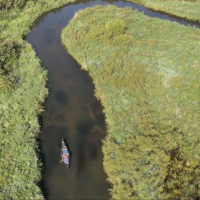
Future Rivers invites you to a special film screening on October 14th of the documentary, River to the Heart (105m), followed by a conversation with the director, Eddy Harris, author of Mississippi Solo. This documentary charts Eddy’s adventures as a lone Black man canoeing 2,318 miles down the entirety of the Mississippi River.
Read more