Filter Results
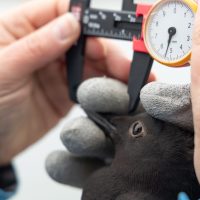
Nesting season on Protection Island is a busy time for SAFS Masters student, Liam Pendleton. Home to tens of thousands of pigeon guillemots and rhinoceros auklets, Liam travels to Protection Island in the Strait of Juan de Fuca every week from May to September to conduct research and monitoring of these seabirds.
Working in the Quantitative Conservation Lab, led by Sarah Converse, Liam is studying the link between breeding success, and marine environmental conditions.
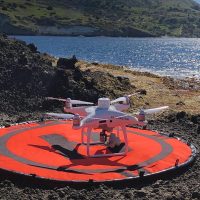
Dr. Corey Garza’s lab at the University of Washington (the Marine Landscape Ecology Lab), seeks to hire a Postdoctoral Scholar in the School of Aquatic and Fishery Sciences (SAFS). The position is supported by internal funding from the School of Aquatic and Fishery Sciences. The candidate hired into this position will have the opportunity to engage in research that utilizes aerial drones to map coastal habitats ranging from the rocky intertidal to kelp forests and statistical modeling to understand the drivers of spatial variation in coastal habitats.
Read more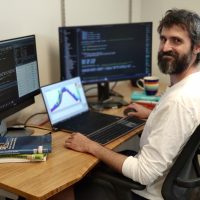
In a post-doc focused on modeling climate change effects in the Gulf of Alaska (GOA), Alberto Rovellini is part of the Punt Lab at SAFS. Beginning in 2020, Alberto’s work is on this area of Alaska which is facing big implications as a result of climate change, from negative economic implications for important fisheries to adverse ecological impacts on plankton, fish, mammals, and seabirds.
Read more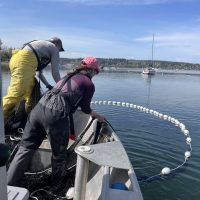
Conducting fieldwork as part of a project funded by Washington Sea Grant, Emily Bishop, a masters student in the Marine Conservation and Ecology Group at SAFS, is exploring the effects of shoreline armoring on nearshore fish abundance.
Shoreline armoring is the term for structures that landowners install on their beaches to prevent erosion and preserve property extent. These structures change the physical characteristics of the beach, potentially making the habitat lower quality for fish that use shallow water to avoid predators, or to feed on terrestrial insects.
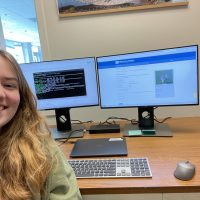
Spending the summer working on a mutation rate project with SAFS Professor Amy Van Cise, Sophie Garrote is using bioinformatics to delve into different dolphin species.
Part of a mentorship program through UW LSAMP which focuses on enhancing minority participation in STEM, Sophie has been picking up valuable skills such as programming, knowledge of cetacean species, and getting hands-on experience with research.
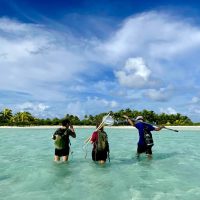
Almost 5,000 miles away from the University of Washington lies Tetiaroa, an atoll in French Polynesia surrounded by a ring of coral reefs.
A team of UW scientists have visted Tetiaroa each year since 2018 to study seabird populations, which play a vital role in marine environments and the islands that lie within them. A variety of factors negatively impact Tetiaroa’s seabird population, including invasive species and climate change.
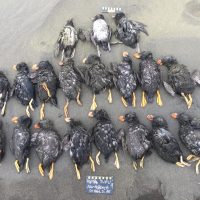
New research led by the University of Washington uses data collected by coastal residents along beaches from central California to Alaska to understand how seabirds have fared in recent decades. The paper, published July 6 in the journal Marine Ecology Progress Series, shows that persistent marine heat waves lead to massive seabird die-offs months later.
Read more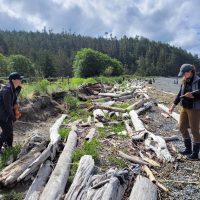
Jason Toft from the UW Wetland Ecosystem Team has been monitoring shoreline armor restoration in Puget Sound for over a decade at sites where artificial armor on beaches has been removed to facilitate the restoration of intertidal areas.
Shoreline armor, also known as seawalls and bulkheads, occurs on over 25% of Puget Sound’s shorelines and was historically installed along homes and infrastructure to address erosion risk.
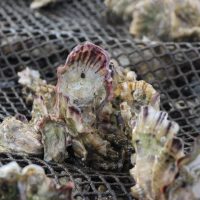
Washington State is the leading aquaculture shellfish producer in the United States and shellfish aquaculture has been a culturally and economically important part of the Pacific Northwest landscape for thousands of years. As part of his thesis project, SAFS master’s student, Karl Veggerby, explored the foraging ecology of crabs and fish inside shellfish areas.
The aim? To quantify how shellfish farms are used as foraging habitat for common nearshore species of fishes and crabs compared to unfarmed eelgrass meadows and mudflats.
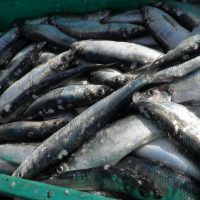
A new study produced by The Nature Conservancy (TNC) and the University of Washington (UW), with the lead researcher from SAFS, provides the first-ever nationwide assessment of non-federally managed fisheries in the United States.
Read more