Filter Results
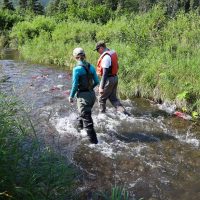
Nestled among a set of glacial lakes in the Wood River system is where scientists with the Alaska Salmon Program spend their summers. From students just beginning their research journeys in aquatic sciences, to seasoned field technicians and faculty, the camps based on Lake Aleknagik and Lake Nerka are the temporary home for both scientists and the fish that they are studying: Pacific salmon.
Read more
The Arctic is warming much faster than the rest of the planet. I study animals that are inextricably tied to the sea ice, which is disappearing. Narwhals spend most of their time in deep water, in and under dense ice. They need cold water. The other species I study is polar bears. Everything about being a polar bear is tied to the ice.
Read more
Historical ecology and data-limited fisheries stock assessment methods shed light on threatened Puget Sound Yelloweye Rockfish
By applying elements of historical ecology, fisheries science, and conservation biology in a highly collaborative research effort, researchers from the University of Washington School of Aquatic and Fishery Sciences (SAFS), NOAA Fisheries, and the Washington Department of Fish and Wildlife (WDFW) are delivering new insights into the status of Yelloweye Rockfish.
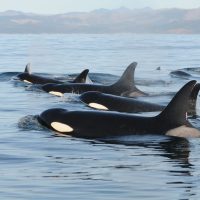
The University of Washington Whale and Dolphin Ecology lab and the Genetics and Evolution lab at NOAA Northwest Fisheries Science Center are seeking to hire a Research Scientist/Engineer II – Molecular Genetics Technician to support projects assessing marine mammal and fish population genetics using a wide variety of genetic lab techniques. The position will primarily support the genetic analysis of killer whale diets using fecal samples, with additional opportunities to work on various fish and marine mammal genetics projects expected.
Read more
Named as the first Outstanding Graduate of Western Washington University’s Marine and Coastal Sciences program, Amirah Casey has recently joined the Applied Ecology Lab as an MS student, advised by Mark Scheuerell. Amirah shared with us what brought her to SAFS, plus what she is most excited about in this next step in her academic journey.
Watch the WWU video featuring Amirah
Throughout my undergraduate career I had received many encouragements that I should attend graduate school.
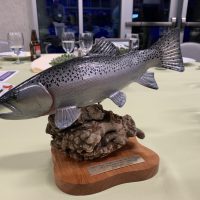
As part of the Trout Unlimited annual awards, SAFS Professor Tom Quinn has received the Jack Williams Award for Applied Conservation Science. Read about why Tom was selected for this award in the write-up below, reposted from Trout Unlimited.
Recently retired from full-time teaching and research at the University of Washington, Professor Tom Quinn deserves massive thanks for the huge body of research and writing on Pacific Rim fisheries and especially on salmon and trout of the Pacific Northwest and Alaska.
Read more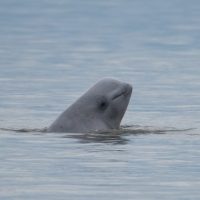
New study uses integrated population models to predict extinction risk for Cook Inlet beluga whales and lend insight into factors limiting the recovery of protected populations.
Sparse monitoring data and persistent knowledge gaps can hamper conservation efforts aimed at recovering depleted wildlife populations. In a new study, researchers from the UW School of Aquatic and Fishery Sciences (SAFS) set out to tackle this issue for federally endangered Cook Inlet beluga whales by developing an integrated population model that capitalizes on all available information to understand factors that may be affecting survival, reproduction, and population viability.
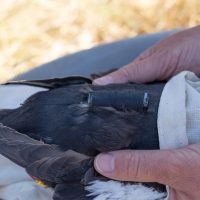
In an effort to establish a better understanding of the foraging habits of rhinoceros auklets and pigeon guillemots on Protection Island, Liam Pendleton’s seabird research has involved GPS tagging and monitoring of these seabird species to delineate key foraging locations in the waters surrounding the island. Rhinoceros auklets migrate all along the West Coast of the US and Canada, and nest on the same island as pigeon guillemots, featured in a previous article by SAFS.
Read more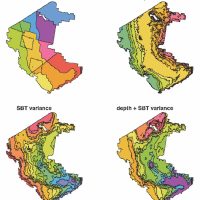
Fishery-independent survey data represents essential information for stock assessment, ecosystem-based fishery management initiatives, and applied ecological research. These data refers to information collected over space and time about populations of marine organisms, such as population abundance and biomass. The data can be used to fit statistical models to obtain multiple products for the assessment and management of marine populations. and can provide a comprehensive and standardized picture of marine populations when collected consistently over time, particularly with respect to gear selectivity and sampling design.
Read more
So two coastal ecologists and a quantitative environmental scientist walk into a bar ….
Nope, not a joke! It is just the School’s newest faculty getting together for a social hour. That’s right, this past academic year we successfully recruited three outstanding new faculty to our School. This newsletter edition includes a feature on Corey Garza, who arrived in September and is already building up his lab.