Filter Results
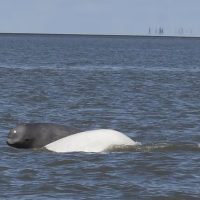
SAFS PhD student, Arial Brewer, joins the Oregon Public Broadcasting ‘Think Out Loud’ series to share her research into the impact of ship noise on Alaska’s Cook Inlet beluga whales.
Read more
With contributions from SAFS scientists including Jackie Padilla-Gamiño, Corey Garza and Xochitl Clare, Oceanography’s special issue addresses structural and cultural obstacles encountered by underrepresented and marginalized scholars.
Read more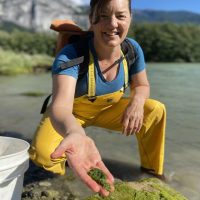
As much as she loves research, Marjorie Wonham, the newest faculty member in the UW Marine Biology program at UW, is passionate about teaching.
Read more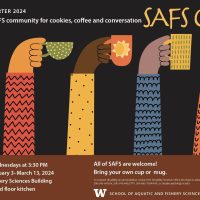
Join us every Wednesday at 3.30pm for coffee, treats and community conversation this Winter 2024 Quarter!
Take a break from your busy week and join your fellow SAFS community – students, staff, researchers, faculty – every week.
Wednesdays, 3.30pm, SAFS third floor kitchen
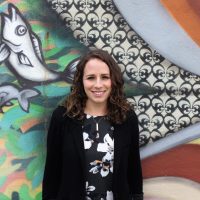
Joining SAFS as Assistant Professor in January 2024, Jessica Gephart brings to the school her expertise in global food trade systems. Always having an interest in scientific problems, Jessica started off her career in aquatic ecology and modeling before becoming involved in a side project in her lab at the time, focused on food systems and food trade. “I was interested in the modeling approaches that parallel these systems and realized that a lot of studies didn’t look at fish at all.
Read more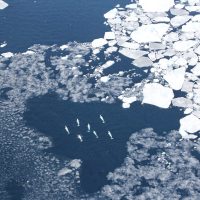
Recently completing her PhD focused on marine mammals in Greenland, Marie Zahn’s work in the Arctic provides a deeper look into two species: narwhals and belugas.
Conducting her research at the School of Aquatic and Fishery Sciences (SAFS) as a member of the Laidre Lab, Marie explored the marine habitat and sounds produced by narwhals and belugas using oceanographic and acoustic data collected from West Greenland.
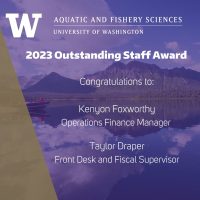
This year’s Outstanding Staff Award has been presented to two exemplary colleagues who went above and beyond in their work in the face of a UW-wide financial system transition: Kenyon Foxworthy and Taylor Draper.
Based in the SAFS admin suite, Kenyon is the Operations Finance Manager and Taylor is the Front Desk and Fiscal Supervisor. Both have been recognized for their patience and perseverance with the roll-out of the new UWFT system.

New research led by SAFS doctoral student, Arial Brewer, documents the vocal repertoire of Cook Inlet beluga whales for the first time.
Read more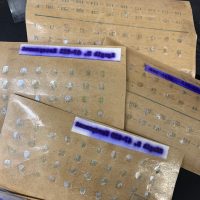
For over 60 years, the Alaska Department of Fish and Game have collected scales from sockeye salmon in Bristol Bay. Now, these scales are receiving special treatment in a new project led by SAFS graduate student Grace Henry, who is conducting stable isotope analysis to examine how food webs in the North Pacific Ocean have changed since the 1960s.
Chemistry has always been Grace’s biggest interest: “I love chemistry, and for me, it’s the cornerstone of ecological science.” Working with stable isotopes in her pre-graduate studies, Grace wanted to use this method during her thesis work on food webs using historical archived samples.
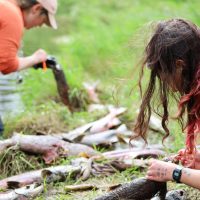
Watch Part 2 of a summer with the Alaska Salmon Program, now live, featuring the students who are essential to the program.
Read more