Filter Results
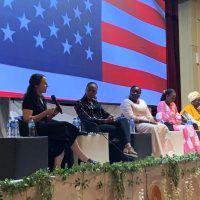
In her role as a US Science Envoy, SAFS Assistant Professor Jessica Gephart was selected as one of seven distinguished scientists in January 2023, with this position extended through 2024. Through this role, Jessica is part of a team which helps inform various US institutions and the scientific community about opportunities for science and technology cooperation abroad.
“Science diplomacy creates an opportunity for knowledge exchange across borders and allows the US to model scientific independence,” Jessica shared.
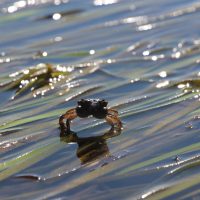
As interest and investment in shellfish aquaculture have expanded both locally and globally, so has interest in how these farms modify intertidal habitat and whether the complex structure created by the shellfish and shellfish growing gear provides ecosystem services that are comparable to those of unfarmed areas, such as mudflats and eelgrass meadows.
Read more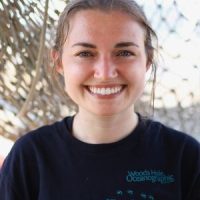
The Ecological Society of America (ESA) has announced the recipients of the 2024 Graduate Student Policy Award, for students engaged in advocacy with an interest in science policy, which includes SAFS grad Helena McMonagle.
Read more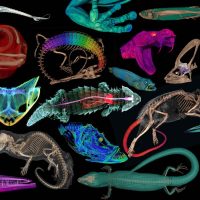
Natural history museums have entered a new stage of discovery and accessibility, where scientists around the globe and curious folks at home can access valuable museum specimens to study, learn or just be amazed, led by a team including UW scientists and the Burke Museum of Natural History & Culture.
Read more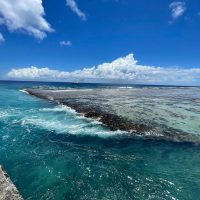
Transitioning from a SAFS research scientist to a graduate student in Fall 2023, Kat Lasdin is familiar with the world of microplastics research. As a member of Jacqueline Padilla-Gamiño’s lab, one of the projects Kat has been involved in focuses on water, sand, and microplastics in Tetiaroa, an atoll in French Polynesia. Tetiaroa is also the site of a breadth of other UW-led work, including seabirds and shark research.
Read more
Working at the intersection of environmental justice, food sovereignty, and community-based research, Nicole Doran is centering Indigenous perspectives in her work. Nicole’s research for her masters degree, as a member of Mark Scheuerell’s Applied Ecology Lab at SAFS, has involved a deep dive into available literature to examine the impact of settler colonialism on Indigenous food systems.
With this year marking the 50th anniversary of the Boldt Decision, which upheld the rights of members of several Western Washington Indigenous tribes to fish in accordance with terms of treaties signed in the 1850s, discussions around this topic remain deeply relevant.
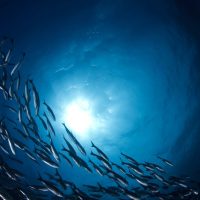
From Alaska to California, researchers are looking into the impact of climate change on the distribution of fish that live near the seafloor. Focusing on species such as halibut, pollock, sablefish and rockfishes, which have commercial and environmental importance for the Pacific Coast of the US, these fish are impacted in different ways by shifting ocean temperature and oxygen, resulting in a myriad of knock-on effects.
Read more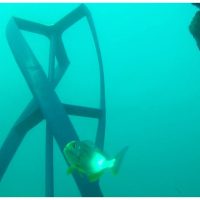
Diving into the world of marine renewable energy, Jezella Peraza, a masters student at SAFS, has recently published a paper looking into the probabilities of fish-turbine encounters and impact.
Whereas the renewable energy sector utilizing solar and wind energy is booming in the United States, the uptake of tidal energy is off to a slower start. Tidal turbines, placed on the sea floor, generate energy when water moves through a constricted area.

Newly based at the University of Washington is the Marine Landscape Ecology Lab (MLEL), led by SAFS Professor, Corey Garza. Conducting research along the Californian coast using drones, Corey’s lab is currently working on two projects funded by the California Ocean Protection Council.
In a collaborative effort with UC Santa Cruz, Stanford University, and the Middlebury Institute for International Studies, the team is trying to understand how the interaction between oceanographic conditions and the presence of marine mammals, impacts the presence of great white sharks.
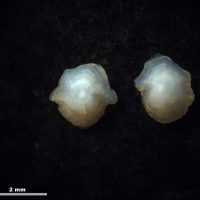
Fighting for the little guy. That’s one of the things Jess Diallo, PhD candidate at SAFS, likes about her work. Her research encapsulates this idea as she explores the impact of invasive fish on native fish food webs, based in a tributary to the lower Colorado River.
Part of Julian Olden’s Freshwater Ecology and Conservation Lab, Jess’ fieldwork in 2021 involved collecting samples for stable isotope analysis, including fish eye lenses, to provide a deeper look into how fish move throughout the food web.