Filter Results
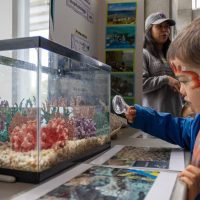
The number of people diving into aquatic sciences during the 2024 Open House on 18 May more than doubled this year, with 1,200 visitors of all ages joining us for a day of hands-on activities.
Read more
Eric Essington, UW Biology senior, has been working on his independent research project in the Roberts Lab for the past year, looking into a familiar hard-shelled mollusk: the oyster. Why? To simulate temperature changes associated with climate change and explore the impact on Pacific oysters.
Read more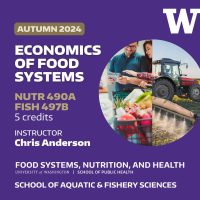
How is our food system shaped by the choices of consumers, retailers, farmers, and fish harvesters?
If you’re interested in food and food policy, NUTR 490/FISH 497B Special Topics: Economics of Food Systems is a new undergraduate course offered in autumn 2024 by UW SAFS, in conjunction with the Food Systems, Nutrition, and Health Program in the School of Public Health, which explores the economic forces that shape individual decisions and overall outcomes in our food system.
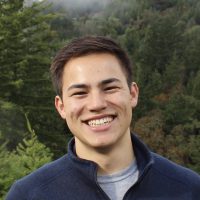
Congratulations to Markus Min, the recipient of the 2023-2024 Award for Outstanding Commitment to Diversity, Equity, Inclusion, Justice, and Accessibility (DEIJA) given by the College of the Environment. Markus, a Ph.D. Candidate in SAFS, has been a trusted leader since joining the school in fall of 2020, and a strong advocate for equity and inclusion at both the unit level and across the College.
Read more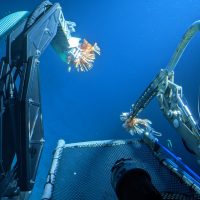
In a lot of ways, deep reefs are understudied. Too deep for divers to reach and only accessible by submarines, this zone of ocean habitat is often overlooked. We spoke to SAFS master’s student, Sarah Yerrace, about her research focused on one thing in particular: lionfish.
Read more
As part of a video series profiling the science and scientists behind some of the environment’s most unexpected research, Grist visited the Wood Lab at SAFS, to find out about Chelsea Wood’s parasite research.
Read more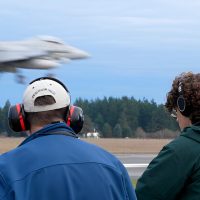
According to new research published by SAFS grad student, Giordano Jacuzzi, military aircraft noise from Naval Air Station Whidbey Island presents a substantial risk to public health.
Read more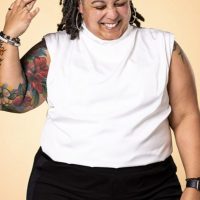
Part of the SAFS PhD program, Chris Mantegna has been named as one of the Husky 100 for 2024. Students are chosen for actively connecting what happens inside and outside of the classroom and applying this learning to make a difference on campus, their communities, and for the future.
Read more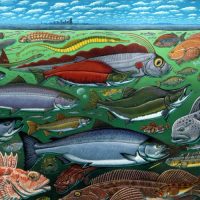
SAFS Assistant Professor, Jessica Gephart, speaks to KUOW’s Kim Malcolm about her research and why seafood choices matter.
Read more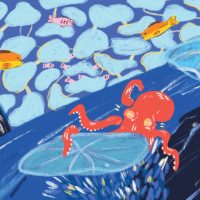
The Daily UW features the degrees offered at SAFS, which is centered on the belief that students must experience the environments and species they’re studying.
Read more