Filter Results
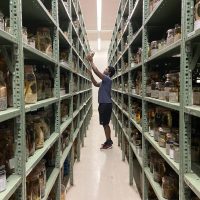
Housed in a set of World War II artillery bunkers on the outskirts of New Orleans is a surprising, and gargantuan, fish collection. Home to the largest collection of post-larval fish specimens in the world – 7 million to be precise – the Royal D. Suttkus Fish Collection at the Tulane University Biodiversity Research Institute (TUBRI) was the destination for a group of UW researchers over the summer.
Read more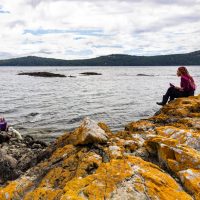
Chris Mantegna, a third-year graduate student at SAFS, has spent the past three summers mentoring undergrads on on Yellow Island, a pristine 11-acre nature preserve in Washington’s San Juan Islands.
Read more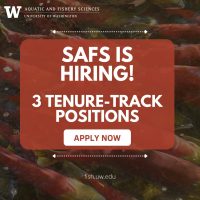
SAFS is hiring for three tenure-track faculty jobs: Assistant Professor Freshwater Ecology, Assistant or Associate Professor in Pacific Salmon ecology, evolution, & management, and Associate or Full Professor in Applied Organismal Biology & Aquaculture and Executive Director of the Western Regional Aquaculture Center. Apply now!
Read more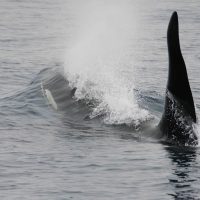
A team led by researchers at the University of Washington and the National Oceanic and Atmospheric Administration has uncovered key information about what resident killer whale populations are eating. Researchers had long known that resident killer whales prefer to hunt fish, particularly salmon. But some populations thrive, while others have struggled.
Read more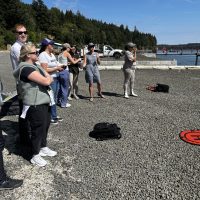
On August 16, congressional staff from the State of Washington gathered for a drone demonstration, led by the Marine Landscape and Ecology Lab (MLEL), based at the University of Washington School of Aquatic and Fishery Sciences.
Read more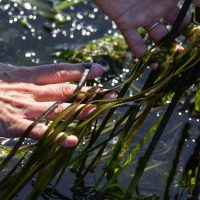
Eelgrass meadows are among the most productive and ecologically important places in Puget Sound. Already highly valued as nurseries for sea life, researchers including SAFS Affiliate Faculty, Drew Harvell, have discovered a new eelgrass superpower, as living urban systems that reduce human pathogens in seafood by as much as 65%.
Read more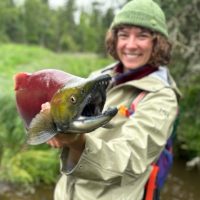
You may be familiar with the Alaska Salmon Program and its critical role in producing knowledge for managing and conserving regional ecosystems and their fisheries. But we’re doing a deeper dive into the role of students in the program, the opportunities for immersive learning, and the bonding experience with both fellow students and instructors during their time in Alaska.
Read more
In an increasingly globalized world, aquatic foods have followed the same trend. Seafood is one of the most highly traded foods in the world and is a critical resource for human nutrition, livelihoods, and revenue. But despite this globalization trend, researchers have revealed that the basic characteristics of aquatic food trade remain largely unknown.
Read more
On 16 September 2024, the newest faculty member will join SAFS, Assistant Professor Carter Smith. Carter is an interdisciplinary coastal ecologist whose interests lie at the intersection of multiple disciplines including community ecology, conservation and restoration science, and coupled human natural systems research.
Read more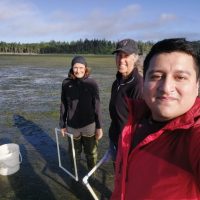
The WSG-funded research informs the future of eelgrass restoration in Washington, and the study is headed by UW Professors Kerry Naish (SAFS) and Jennifer Ruesink (Biology), as well as SAFS doctoral student Bryan Briones Ortiz. Their research first looked at the baseline genetic structure of the eelgrass population in Washington.
Read more