Filter Results

Hunted nearly to extinction during 20th century whaling, the world’s largest animal, the Antarctic blue whale, went from a population size of roughly 200,000 to little more than 300. The most recent abundance estimate in 2004 put Antarctic blue whales at less than 1% of their pre-whaling levels. But is this population recovering? Is there just one population of Antarctic blue whales, or multiple? Why do these questions matter for conservation? PhD student, Zoe Rand, is tackling these questions in a new study.
Read more
Chelsea Wood, SAFS Associate Professor, has an upcoming children’s book titled “Power to the Parasites! Everything You (N)ever Wanted to Know About the Creepy Crawlies Hidden in Your Home, Your Food, Your Pets – and Maybe Even in You!” The book introduces kids to the world of parasitism.
Read more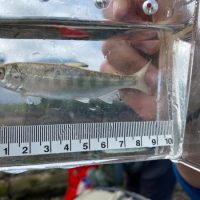
In a new blog by Long Live the Kings, they explore the preliminary findings of post-restoration monitoring undertaken by the UW Wetland Ecosystem Team at a habitat restoration project at Vigor Shipyards, which was completed in the Spring of 2023.
Read moreThe School of Aquatic and Fishery Sciences (SAFS) is hiring a Teaching Assistant for duties in Winter Quarter 2025. Apply by 6 November.
Read more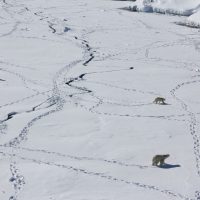
Polar bears in some parts of the high Arctic are developing ice buildup and related injuries to their feet, apparently due to changing sea ice conditions in a warming Arctic. While surveying the health of two polar bear populations, researchers led by Kristin Laidre from UW SAFS, found lacerations, hair loss, ice buildup and skin ulcerations primarily affecting the feet of adult bears as well as other parts of the body.
Read more
In a new video created by the Burke Museum, Fish Collections Manager Katherine Maslenikov takes us behind the scenes of the Burke Museum to answer questions about the giant bizarre Sunfish washing up on the shores of Oregon
Read more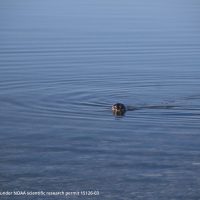
Taking the AERA class as part of the Alaska Salmon Program was a pivotal moment for two undergrads, who went on to contribute to major discoveries in cryptic diversity in two vastly different species: harbor seals and fish parasites.
Read more
Join us for the 2024 Preview of the Eastern Bering Sea Pollock Stock Assessment, held live on Wednesday 6 November at 4pm. It will take place on the UW Campus in Room 102 on the first floor of the Fishery Sciences Building (1122 NE Boat Street).
Dr. Jim Ianelli, NOAA Fisheries Alaska Fisheries Science Center (AFSC) scientist and SAFS affiliate professor, will present the EBS pollock assessment model and the most recent trends in the EBS pollock stock.
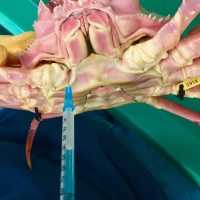
Bitter crab syndrome might sound like an attitude problem, but it’s actually a condition faced by two very valuable fisheries in Alaska: snow crabs and Tanner crabs. So-called for the bitter flavor of crab meat in infected crabs, bitter crab syndrome (BCS) is caused by a parasitic dinoflagellate of the genus Hematodinium and infects a number of crustacean species around the globe. We spoke to SAFS grad student, Aspen Coyle, about her research.
Read more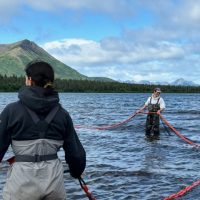
It’s not all work while visiting the Alaska Salmon Program camps for the summer field season. Students head up to southwest Alaska, some for over three months, and downtime is a chance to explore, connect with their peers, and experience living in a field camp.
Read more