Filter Results
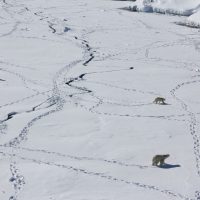
Polar bears in some parts of the high Arctic are developing ice buildup and related injuries to their feet, apparently due to changing sea ice conditions in a warming Arctic. While surveying the health of two polar bear populations, researchers led by Kristin Laidre from UW SAFS, found lacerations, hair loss, ice buildup and skin ulcerations primarily affecting the feet of adult bears as well as other parts of the body.
Read more
In a new video created by the Burke Museum, Fish Collections Manager Katherine Maslenikov takes us behind the scenes of the Burke Museum to answer questions about the giant bizarre Sunfish washing up on the shores of Oregon
Read more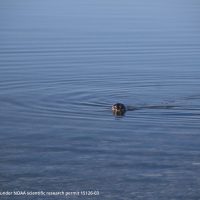
Taking the AERA class as part of the Alaska Salmon Program was a pivotal moment for two undergrads, who went on to contribute to major discoveries in cryptic diversity in two vastly different species: harbor seals and fish parasites.
Read more
Join us for the 2024 Preview of the Eastern Bering Sea Pollock Stock Assessment, held live on Wednesday 6 November at 4pm. It will take place on the UW Campus in Room 102 on the first floor of the Fishery Sciences Building (1122 NE Boat Street).
Dr. Jim Ianelli, NOAA Fisheries Alaska Fisheries Science Center (AFSC) scientist and SAFS affiliate professor, will present the EBS pollock assessment model and the most recent trends in the EBS pollock stock.
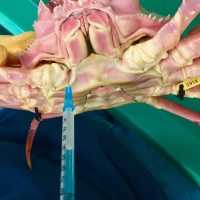
Bitter crab syndrome might sound like an attitude problem, but it’s actually a condition faced by two very valuable fisheries in Alaska: snow crabs and Tanner crabs. So-called for the bitter flavor of crab meat in infected crabs, bitter crab syndrome (BCS) is caused by a parasitic dinoflagellate of the genus Hematodinium and infects a number of crustacean species around the globe. We spoke to SAFS grad student, Aspen Coyle, about her research.
Read more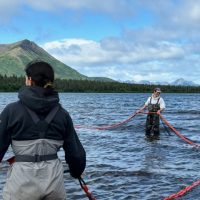
It’s not all work while visiting the Alaska Salmon Program camps for the summer field season. Students head up to southwest Alaska, some for over three months, and downtime is a chance to explore, connect with their peers, and experience living in a field camp.
Read more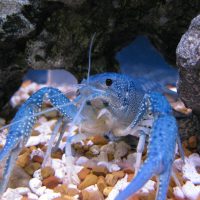
They may be small, but crayfish are mighty in other ways, one of them being invasive risk in areas where they are not natively found. Crayfish are increasingly being traded online for ornamental purposes, such as aquariums, and in a new study led by SAFS Professor Julian Olden, the first ever global assessment of the online trade in and associated invasion risk of freshwater crayfishes was conducted.
Read moreReflections on Tribal Fisheries and Co-Management 50 years after the Boldt Decision: Bevan Symposium
SAFS annually hosts the “Bevan Seminar on Sustainable Fisheries” funded by gifts from the Bevan family, and contributions from NOAA Fisheries and SAFS. This year, we will hold a one-day symposium on Thursday November 21, 2024, centered on Tribal voices, reflecting on the past 50 years and considering what the future of Washington fisheries will look like over the next 50 years.
Read moreBe part of a regional response and a collaborative project involving the Washington Cooperative Fish and Wildlife Research Unit, Washington Department of Fish and Wildlife, and the U.S. Geological Survey!
The team is looking to recruit an undergraduate researcher to help with a project focused on acoustic monitoring for invasive American bullfrogs. These large frogs are voracious predators that can decimate native species populations, and northwestern pond turtles have been heavily impacted by predation on hatchling and juvenile turtles.
The California Ocean Access & MPA Management Project is hiring an undergraduate student assistant. This project aims to learn more about how people from disadvantaged and severely disadvantaged communities (as defined by the US Census), and Tribal communities access, use, relate to, and/or value the ocean. Additionally, the project plans to investigate the ability of Marine Protected Areas (MPAs) to amplify or diminish such benefits for people across different demographics, locations, and user groups as climate change progresses.
Read more