Filter Results
YMCA Camp Dudley in Naches, WA, is hiring naturalists for their spring season. The program serves fifth and sixth graders from Yakima Valley and surrounding areas, who come to Camp Dudley for one to four days to participate in hands-on science classes (with other disciplines woven in), outdoor recreation activities, and community building experiences. This is a great job for people who love natural and environmental sciences, being outdoors, and working with kids.
Read moreCramer Fish Sciences is currently looking to hire Seasonal Biological Technicians, along with a Lead Seasonal Senior Biological Technician to assist with a project taking place in the Eugene, OR area. These positions offer a unique opportunity to gain hands-on experience in fisheries research and contribute to meaningful conservation projects. Individuals with a background in biology/ecology/natural resources and a passion for fish conservation are encouraged to apply!
Read moreThe Research on Aquatic Disease Lab is hiring for two positions. More details are available on their website.
Laboratory Technician
The RAD Lab at The Cary Institute of Ecosystem Studies is recruiting for a Laboratory Technician to join our team investigating the drivers and consequences of infectious disease in aquatic ecosystems. This position will involve three core duties: 1) maintaining basic operations in the laboratory, 2) performing field sampling protocols, and 3) assisting with observational and experimental studies.

Congratulations to Lisa Cantore, who was chosen as the recipient of the 2024 Outstanding Staff Award. In her role as Assistant Director, Research Administration, Lisa was described as “untiring and indefatigable, working to get proposals submitted.”
Read more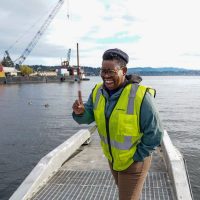
Logs are being adjusted and plans are in place for floating gardens to be deployed into the cove of Be’er Sheva Park in South Seattle. The goal is to bolster fish habitat as part of a larger project to rejuvenate a Lake Washington beach that serves historically Black and diverse neighborhoods. SAFS PhD student, Ashley Townes, is leading the project, featured in a story by KUOW.
Read moreJulian Olden selected to serve on The Nature Conservancy’s inaugural External Science Advisory Board
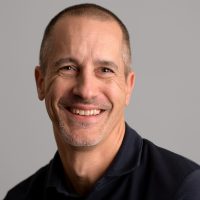
Julian Olden, a Professor at the UW School of Aquatic and Fishery Sciences (SAFS), has been chosen as one of 10 scientists to serve on the inaugural External Science Advisory Board (ESAB) for The Nature Conservancy (TNC).
Read more
Hunted nearly to extinction during 20th century whaling, the world’s largest animal, the Antarctic blue whale, went from a population size of roughly 200,000 to little more than 300. The most recent abundance estimate in 2004 put Antarctic blue whales at less than 1% of their pre-whaling levels. But is this population recovering? Is there just one population of Antarctic blue whales, or multiple? Why do these questions matter for conservation? PhD student, Zoe Rand, is tackling these questions in a new study.
Read more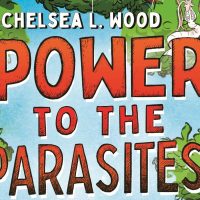
Chelsea Wood, SAFS Associate Professor, has an upcoming children’s book titled “Power to the Parasites! Everything You (N)ever Wanted to Know About the Creepy Crawlies Hidden in Your Home, Your Food, Your Pets – and Maybe Even in You!” The book introduces kids to the world of parasitism.
Read more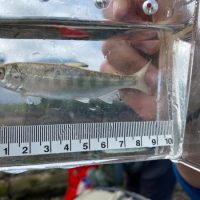
In a new blog by Long Live the Kings, they explore the preliminary findings of post-restoration monitoring undertaken by the UW Wetland Ecosystem Team at a habitat restoration project at Vigor Shipyards, which was completed in the Spring of 2023.
Read moreThe School of Aquatic and Fishery Sciences (SAFS) is hiring a Teaching Assistant for duties in Winter Quarter 2025. Apply by 6 November.
Read more