Filter Results
Reducing Pacific halibut (Hippoglossus stenolepis) bycatch in the Pacific cod (Gadus macrocephalus) bottom trawl fishery
We are looking to hire a junior or senior undergraduate student to assist in the development of a Bycatch Reduction Performance Indicator (BPI) as part of a NOAA-sponsored halibut bycatch reduction device (BRD) project. The student will conduct/assist in up to three tasks: literature review, BPI development, and BRD scoring.

Dash Dicksion, a SAFS undergrad, got to return to his home island of Oahu during his NOAA HPP internship in the summer of 2024, working with the Ecosystem Sciences Division of NOAA’s Pacific Islands Fisheries Science Center. He spent 30 days at sea, plus time in the lab, focused on the biocultural and ecological aspects of fish larvae across Hawai’i Pae ‘Aina (the Hawaiian archipelago).
Read moreThe Wood Lab at the University of Washington seeks to hire three undergraduates for a 9-week Research Experiences for Undergraduates (REU) internship to take place between June and August of 2025. We anticipate hiring one undergraduate from the University of Washington and two who attend other universities. The position is supported by a CAREER award from the National Science Foundation for a project entitled, “Reconstructing parasite abundance in river ecosystems over the past half century.” The students hired into this position will have the opportunity to be at the forefront of a new sub-discipline: the historical ecology of parasitism.
Read morePacific Hybreed, Inc. (www.pacifichybreed.com) is revolutionizing shellfish aquaculture through an innovative genetic breeding program. By integrating genetic research with environmental field data, we increase yield and resilience of Pacific oysters and Manila clams against the challenges of climate change and emerging diseases.
Pacific Hybreed operates hatcheries at NOAA Manchester Research Station in Port Orchard, WA and the Natural Energy Laboratory of Hawaiian Authority (NELHA) in Kona, HI.
Swinomish Fisheries is excited to announce that we are looking for an individual to fill a new, full-time, lead scientist position. The Quantitative Fisheries Biologist will report directly to Tandy Wilbur, the Fisheries Manager for the Tribe, but the individual will work very closely with our Shellfish Team.
Read more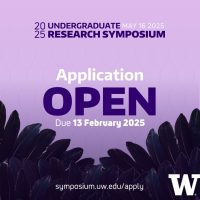
Applications are now open for the 2025 Undergraduate Research Symposium at the University of Washington. Open to undergrad researchers wanting to share and celebrate their research and creative works! Apply with a project title and statement, collaborate with your mentors and group members to see yourself on May 16, 2025.
Read more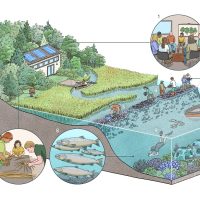
Ecosystem restoration has historically had a very ecological focus. However, while teaching a special interdisciplinary class during her time at Duke University, SAFS Assistant Professor, Carter Smith, took a slightly different view: how can ecosystem restoration be used to directly improve human wellbeing?
Read more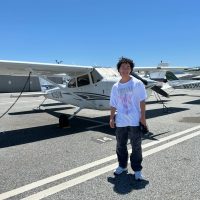
When awarded the NOAA Hollings Scholarship, students spend a summer working on a topic related to the wide-ranging scientific expertise of NOAA, from fisheries to the atmosphere. For SAFS undergrad, Michael Han, he’ll be joining the NOAA Hurricane Hunters to take data from notable past missions and present them in a visualized format on NOAA’s Science on a Sphere display.
Read moreThe King County Department of Natural Resources, Water and Land Resources Division seeks a seasonal Environmental Aide to assist with environmental monitoring and applied studies that support salmon recovery efforts. This position is in the Watershed and Ecological Assessment Team within the Science and Technical Support Section. The position will primarily support an experimental study of juvenile salmon growth and diet, along with a study of juvenile salmon use of tributary streams.
Read more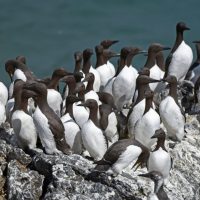
A University of Washington citizen science program — which trains coastal residents to search local beaches and document dead birds — has contributed to a new study, led by federal scientists, documenting the devastating effect of warming waters on common murres in Alaska.
Read more