MS

Molly Ball
Molly Ball (she/her)
- B.S. Ecology, Evolution, Conservation Biology, Marine Biology, University of Washington
- Genetics and Genomics
- Marine Mammal Ecology
- Amy Van Cise
Advisor:
Mollie is a first-generation, non-traditional student who took a wiggly and windy path to get to SAFS- she attended four different community colleges in three different states! As an undergrad right here at the University of Washington, Mollie used acoustics to study how environmental factors influence bat and dolphin behavior in human-altered landscapes, such as restoration sites and macroalgae farms.
As a Master’s student, Mollie is a poop scientist! More specifically, her research uses non-invasive molecular tools to better understand marine mammal prey landscapes and gut microbes. Some of her study species include killer whales, belugas, bearded seals, and ringed seals.
Outside her research, Mollie strives to serve as a resource for her communities by participating in mentorship, outreach, and education. She is always happy to chat with aspiring scientists from all backgrounds to share her own path and any resources she has found along the way.

Grant Christian
Grant Christian
- BS Fisheries Science, Cal Poly Humboldt
- Conservation
- Genetics and Genomics
- Resource Management
- Lorenz Hauser
Advisor:
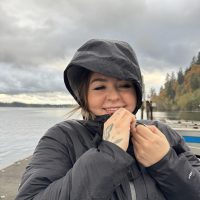
Grant’s graduate work focuses on the conservation of Pacific herring throughout Puget Sound. He is working to determine the genetic composition of herring at particular spawning sites in an effort to conserve phenological variability and inform management decisions considering changing environmental pressures.
Grant is originally from Edmonds, WA, but moved down the coast and graduated from Cal Poly Humboldt with a Bachelor of Science in Fisheries Science. Since then, he has been working as a fisheries technician throughout the West, backpacking to collect genetic samples of cutthroat trout in Yellowstone National Park and managing recreational fisheries around Denver, CO. When not working with fish or fishing, Grant enjoys paddleboarding, playing with his dog, Scout, and honing his skills as a pinball wizard.
Kenna Dailey
Kenna Dailey (she/her)
- BSc Environmental Science and Terrestrial Resource Management: Wildlife Conservation with a minor in Quantitative Science from the University of Washington
- Ecology
- Genetics and Genomics
- Marine
- Physiology
- Laidre Lab
Lab:
- Kristin Laidre
Advisor:
Kenna’s research focuses on investigating the reproductive microbiome of female Southeast Greenland polar bears. More broadly, her research interests include using molecular methods to better understand wildlife health in the Arctic, and the integration of a One Health perspective into wildlife science. Kenna also completed her undergraduate education at UW, graduating with a BSc. in Environmental Science and Terrestrial Resource Management with a focus on wildlife conservation and a minor in Quantitative Science. Her undergraduate thesis with the Prugh lab in SEFS explored the social and ecological predictors of small mammal abundance in an urban landscape. In her free time, she loves hiking, gardening, birdwatching, and generally being outside and touching grass. She also keeps and breeds insects, including beetles, millipedes, isopods, and stick and leaf insects! Kenna is a first generation college student and is passionate about making science accessible for people from all backgrounds.

Jono Grindall
Jono Grindall (he/them)
- B.S. UW School of Aquatic and Fishery Sciences
- Climate and Global Change
- Conservation
- Ecology
- Freshwater
- Marine
- Resource Management
- Statistics and Modeling
- Tim Essington
Advisor:
Jono is from the Seattle area and has lived in the region for most of their life. From a young age they became intimately acquainted with the Puget Sound and the surrounding watersheds and continues to foster their relationship with the waters and their more than human inhabitants.
Jono is researching Puget Sound and coastal Washington coho salmon population dynamics. Their connection to salmon was initiated with recreational fishing on the Puget Sound as a child and was expanded into an academic interest through the completion of their B.S. from the UW School of Aquatic and Fishery Sciences. Jono has crewed several seasons as a commercial salmon fisher in Alaska and has developed a rewarding career as a fish biologist. Jono is on leave as a fisheries biologist for the Tulalip Tribes while they complete their graduate studies.
In their personal time, you can find Jono sailing, fishing, highlining, making art, and hiking.
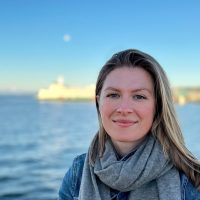
Andrea Hennings
Andrea Hennings
- B.S. Biology, University of Washington
- Conservation
- Ecology
- Marine
- Resource Management
- Statistics and Modeling
- Mark Scheuerell
Advisor:
Claire Klippel
Claire Klippel (she/her)
- BS in Biology and Marine Sciences, the Pennsylvania State University
- Climate and Global Change
- Marine
- Physiology
- Jacqueline Padilla-Gamiño
Advisor:
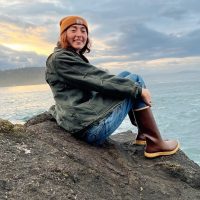
Claire is originally from Pittsburgh, Pennsylvania, where she learned to scuba dive before she could drive. She graduated with a Bachelor of Science in Biology and Marine Sciences from the Pennsylvania State University, where she investigated the responses of algal symbionts and their coral hosts to prolonged exposure to high temperatures. Since then, she has worked as a port sampler for WDFW, a research scientist in biotech, and a field naturalist for the Environmental Science Center.
Claire is now researching how climate-driven changes in algal microbiomes affect pinto abalone larval settlement in the Salish Sea. She is interested in the mechanisms regulating early life stages in benthic organisms and the chemical and microbial cues associated with suitable habitat. Outside of SAFS, you can find her photographing sea slugs, hunched over her microscope, or curled up reading a book with her cat, Nori.
Connor Quiroz
Connor Quiroz
- B.S. Environmental Sciecnce. California State University, Monterey Bay
- Ecology
- Freshwater
- Marine
- Seafood Trade
- Statistics and Modeling
- Jessica Gephart
Advisor:
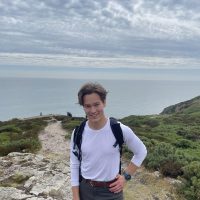
Connor is a passionate learner across disciplines, whether it be towards science, athletics, hobbies, or family and friends. By applying statistics in his undergraduate research, obtaining a B.S. in Environmental Science with two minors in data science and in statistics, he found a drive to develop predictive models that better the lives of others, particularly by improving seafood access. During his graduate program, he is researching how the environment, economy, and social feedbacks impact fishery production and how fishery production impacts environmental health and economic demand under the direction of Dr. Jessica Gephart in her Seafood Globalization Lab. He ran for the track and field team as an undergraduate, setting his university’s 400m collegiate record, and during his free time, he enjoys trying new outdoorsy things (e.g., rock climbing, water polo, wind surfing). He also has a sweet tooth for Oreos and ice cream.
Brenna Rothman
Brenna Rothman
- B.S. Biology, Minor in Chemistry, Oregon State University
- Climate and Global Change
- Ecology
- GIS
- Marine
- Corey Garza
Advisor:
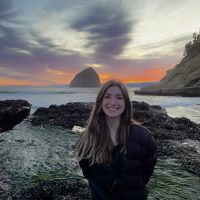
Brenna grew up on Whidbey Island, WA and is very excited to be able to do research in what feels like her own backyard. She is particularly interested in using geospatial technologies to study nearshore communities. Before attending UW, Brenna graduated from Oregon State University in December of 2022 with a B.S. in Biology with a minor in Chemistry, and received a GIS certificate from Oregon State in December of 2023. During her time at OSU, she researched rocky intertidal community ecology with a lab on campus. She was able to start out as a volunteer, then worked her way up from there to work as an intern, a seasonal technician, and a faculty research assistant by the time she left the lab in the fall of 2024. Brenna’s internship was focused on researching the reproductive timing of the critically endangered sunflower sea star, while her technician/research assistant positions were largely field based.
When she’s not doing science, you can find her tidepooling, hiking, cooking, playing guitar, going to concerts, and spending time with her friends and family.
Jonny Singleton
Jonny Singleton
- BA Biology, Carleton College
- Conservation
- Ecology
- Resource Management
- Statistics and Modeling
- Schindler Lab
Lab:
- Daniel Schindler
Advisor:
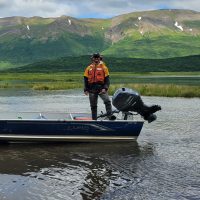
My research primarily focuses on assessing the productivity of freshwater habitats and whether they can support viable rearing habitat for juvenile salmonids. To do this, I use chemical signatures from ear stones (otoliths) in Pacific salmon to reconstruct juvenile life history and freshwater habitat use in Chignik, Alaska.
I enjoy spending time in the outdoors hiking, backpacking, skiing, snowboarding, and fly fishing. Most of all, I love spending time with my dog Lucy, who is the craziest ball of joy I have ever met.
Connor Whalen
Connor Whalen
- B.S. in Ecology and Evolutionary Biology, University of California, Santa Cruz
- Climate and Global Change
- Disease Ecology
- Ecology
- Freshwater
- Marine
- Wood Lab
Lab:
- Chelsea Wood
Advisor:
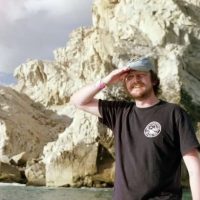
Connor graduated with a degree in Ecology and Evolutionary Biology in 2018. Since then he has worked across a wide range of scientific disciplines, including marine mammal cognition, primate hormones and social structure, and wildlife infectious disease dynamics.
At SAFS, he is interested in using a One Health perspective to study how manifestations of anthropogenic climate change, such as extreme weather events, affect parasitic disease dynamics in fishes, marine mammals, birds, and foxes. When he is not in the lab dissecting samples, he can be found listening to music, reading a good fantasy book, or playing outside.
Mark Yamane
Mark Yamane (he/him)
- B.S. Marine Science and Computer Science, Eckerd College
- Conservation
- Ecology
- Marine
- Resource Management
- Statistics and Modeling
- John Horne
Advisor:
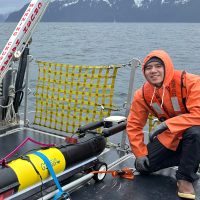
Mark is an NSF Graduate Research Fellow comparing acoustic and optic data from underwater gliders to acoustic and optic data collected by similar sensors on ships in the northern Gulf of Alaska. This kind of cross-platform validation is crucial for incorporating data from alternative platforms into ecosystem monitoring programs. Autonomous systems such as underwater gliders are of particular interest because ships and crew are becoming increasingly and prohibitively expensive for maintaining long term ecosystem timeseries.
While Mark grew up in Shoreline, WA (just north of Seattle), he earned Bachelor of Science degrees in Marine Science and Computer Science from Eckerd College in St. Petersburg, FL to experience other diverse marine ecosystems. Mark’s enthusiasm towards connecting the two disciplines grew as he learned research programming techniques through internships with Oregon State University, the Cooperative Institute for Climate, Ocean, and Ecosystem Studies (CICOES), and NOAA Pacific Marine Environmental Laboratory (PMEL). From 2022 to 2025, he designed software and managed data pipelines for the FAR lab, and developed ways to leverage edge computing to generate near-real-time products built on acoustic and optic data collected by underwater gliders. Outside of research, he enjoys playing board games, performing Okinawan taiko drumming, and tidepooling around West Seattle.
Ph.D.
Callum Backstrom
Callum Backstrom
- B.A., Dartmouth College
- Climate and Global Change
- Ecology
- Marine
- Physiology
- Jacqueline Padilla-Gamiño
Advisor:
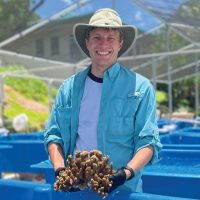
Callum is from Wayne, PA, just outside of Philadelphia. He graduated from Dartmouth College in 2018 with a B.A. in Biology with a focus in Ecology. Callum also minored in Philosophy, with a focus on bioethics and the philosophy of science. After undergrad, Callum worked as a laboratory technician for a couple of years, first studying metal contaminants in New England fisheries at Dartmouth and then studying Hawaiian reef coral ecophysiology at Villanova University. He joined SAFS as a graduate student in winter 2021, where he studies the interactive effects of multiple stressors on reef coral physiology and health. Primarily, Callum focuses on how ocean warming affects the levels of anthropogenic pollutants (such as heavy metals and microplastics) that are ingested by corals and transferred to their offspring. In Callum’s spare time, he loves running, hiking, roaming beaches for sea glass, competing in trivia, and watching films.

Caroline Blommel
Caroline Blommel (she/her/hers)
- B.S. in Zoology and Computational Math from Michigan State University
- M.S. in Fish, Wildlife, and Conservation Biology from Colorado State University
- Conservation
- Ecology
- Resource Management
- Statistics and Modeling
- Sarah J. Converse
Advisor:
I am a proud midwestern transplant (originally from Michigan) and I am the first scientist and (someday) PhD in my family! At SAFS, I study population ecology and movement of seabirds in the Salish Sea.
Arial Brewer
Arial Brewer
- B.S. Marine Biology, University of California, Santa Cruz
- Acoustics
- Conservation
- Ecology
- Genetics and Genomics
- Marine
- Andrew Berdahl
- Amy Van Cise
Advisor:
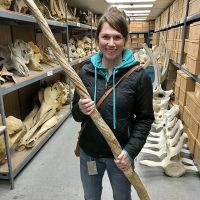
Arial is broadly interested in the ecology, behavior, communication, and sociality of marine mammals. For her PhD, Arial is investigating the vocal behavior, population structure, and epidermal microbial patterns of Alaska’s endangered Cook Inlet beluga whale population. Arial is also a marine mammal biologist at NOAA and studies the acoustic ecology of cetaceans, primarily belugas and killer whales. Arial enjoys being in the field and has been involved in marine mammal surveys off the coasts of Mexico, California, Oregon, Washington, British Columbia, Alaska and Hawaii. Arial earned her Bachelor of Science degree in Marine Biology from the University of California, Santa Cruz in 2010, and previously worked as a marine mammal trainer and research technician studying the bio-acoustics and behavior of bottlenose dolphins, killer whales, walrus, sea lions, seals, and sea otters. Arial enjoys sailing, scuba diving, camping, wildlife photography, and hiking with her dog.

Amirah Casey
Amirah Casey (she/her)
- BS in Marine and Coastal Science and a minor in Spanish
- Climate and Global Change
- Ecology
- Freshwater
- Marine
- Physiology
- Statistics and Modeling
- Mark Scheuerell
Advisor:
Amirah is interested in how climate change and emerging climate solutions affect aquatic ecosystems. She is especially interested in understanding how organisms respond to environmental changes, from warming and tire-derived contaminants to ocean alkalinity enhancement (OAE), a marine carbon dioxide removal approach.
Current research includes studying the effects of 6PPD-quinone, a tire-wear contaminant, on juvenile coho salmon, as well as investigating the potential biological and social impacts of OAE in the Salish Sea. For the OAE research, she has worked with salmon, herring, and oysters in laboratory and field experiments, and recently expanded into social science by studying how aquarium visitors learn about and perceive emerging climate solutions. In addition to her studies in SAFS, she is also a PNW Climate Ambassador, undergraduate mentor, and Students Explore Aquatic Science (SEAS) board member.
Emma Christman
Emma Christman
- BA Geology and Biology, Bates College
- Climate and Global Change
- Conservation
- Ecology
- Freshwater
- Resource Management
- Schindler Lab
Lab:
- Daniel Schindler
Advisor:
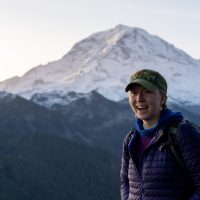
Emma’s primary research interest is in salmon conservation and studying how their ecosystems are shifting with a changing climate. Before joining SAFS in Fall 2023, Emma was a high school science teacher in Massachusetts.
In undergraduate, Emma studied Early Holocene paleoclimate of high arctic marine environments using sclerochronology (old clams!). She has farmed kelp and oysters in Maine, and has also studied earthquakes in the Himalayas. Emma grew up on a farm in Maine and loves spending time hiking, biking, fly fishing, and gardening there with her family. She can often be found cooking, baking, or eating a snack, and yes – she misses eating lobster in Maine very much.
Tessa Code
Tessa Code
- BS Biology & Environmental Science, Santa Clara University
- Climate and Global Change
- Conservation
- Ecology
- Freshwater
- Marine
- Resource Management
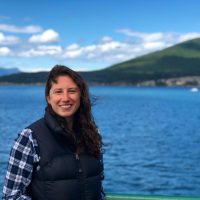
Tessa is an NSF Graduate Fellow and a biological science technician with the USGS Western Fisheries Research Center. Her graduate work aims to quantify the level of artificial light at night on Lake Washington and to research the effects of artificial light on the predation of juvenile salmon by native piscivores.
Tessa grew up in Seattle but took a break from the Pacific Northwest for her undergrad degree and several research positions. After receiving her Bachelor of Science in 2013, Tessa spent 6 years working in the tropics: conducting ecosystem research in Shark Bay, Western Australia, studying fish movement and managing a seat turtle nesting beach for the National Park Service in St Croix, USVI and removing shoreline plastics and derelict fishing equipment for the NOAA Marine Debris Program in the Papahānaumokuākea Marine National Monument. Tessa moved back to Seattle and started working for USGS where she collected fisheries data for bioenergetics-based food web analyses. When she’s not pulling all-nighters on the lake, she’s tending to her vegetable garden, kayaking in the Puget Sound, or doting on her rescue pup, Jacque.
Gabby Commisso
Gabby Commisso
- Cornell University, B.S. in Environment and Sustainability Science
- Climate and Global Change
- Conservation
- Ecology
- Freshwater
- Wood Lab
Lab:
- Chelsea Wood
Advisor:
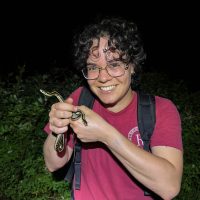
Gabby is from Rochester, NY and grew up around Lake Ontario and the Finger Lakes. She spent her undergraduate at Cornell studying evolutionary morphology and trophic ecology, completing an honors thesis project studying minnow trophic morphology using specimens at the Cornell Museum of Vertebrates.
Gabby’s research interest centers around parasites and invasive species in freshwater ecosystems, tracking change over time using historical preserved specimens. When not in the lab, you can find her on a long walk, constantly distracted by critters.
Grace Crandall
Grace Crandall
- BS, UW School of Aquatic and Fishery Sciences
- MS, UW School of Aquatic and Fishery Sciences
- Conservation
- Disease Ecology
- Genetics and Genomics
- Marine
- Physiology
- Roberts Lab
Lab:
- Steven Roberts
Advisor:
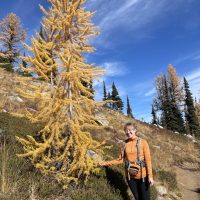
I grew up in Aptos, California (Santa Cruz County) by the ocean and have always been fascinated by it. I have also always been fascinated by diseases, like the bubonic plague, since elementary school. I feel so fortunate to now be in an academic and career trajectory that combines those two passions by studying host response of invertebrates in the face of marine diseases. My MS in SAFS involved investigating the host response of Tanner crab to the dinoflagellate parasite Hematodinium sp. which causes Bitter Crab Disease, through the use of transcriptomics. Since then, I’ve been working on a team focusing on Sea Star Wasting Disease and its most vulnerable host, the Sunflower Sea Star, Pycnopodia helianthoides. My role and the focus of my PhD research is to study the host response using transcriptomics, as part of a much larger effort with multiple different teams with different focuses to come up with a plan to save the Sunflower Sea Star, which is an important keystone predator. I am also part of a team that does work on Eelgrass Wasting Disease in the San Juan Islands. And finally, one BIG passion of mine that ties into my research focus, is the concept of One Health, which is the idea that in order to find solutions to big problems, like diseases, you have to take an interdisciplinary approach that incorporates the animal, human, and environmental health and their interactions, as nothing exists in a silo! I hope to embody that concept as much as possible in my current and future work. Aside from marine invertebrates and diseases, I have lots of other interests! I love to dance, specifically salsa, play boardgames and card games, camp and travel, and I also love to try new things, like skateboarding!
Matheus de Barros
Matheus de Barros
- B.S., Biological Sciences, Federal University of Alagoas, Brazil
- M.S., Marine Sciences, University of South Alabama, US
- Ecology
- Resource Management
- Statistics and Modeling
- Branch Lab
Lab:
- Trevor Branch
Advisor:
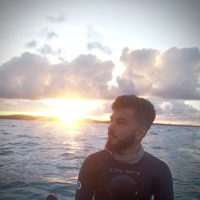
Matheus is a quantitative fisheries biologist, with a B.S. in Biology from the Federal University of Alagoas, Brazil, and a Master’s in Marine Sciences from the University of South Alabama, United States. Matheus is interested in stock assessment/statistical modeling to inform how to best manage fisheries resources.
Angela Dillon
Angela Dillon (she/her)
- Conservation
- Ecology
- Freshwater
- Statistics and Modeling
- Daniel Schindler
- Mark Scheuerell
Advisor:
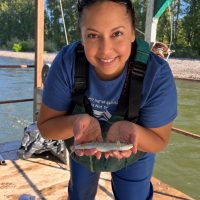
Angela Dillon is a PhD student co-advised by Daniel Schindler and Mark Scheuerell. Her doctoral research integrates field ecology, diet and prey availability, thermal infrared imagery, and spatial stream network modeling to investigate food resources, thermal heterogeneity, cold-water refuges, and the effects of habitat restoration on juvenile salmon. Angela is also the Water Quality Program Manager for the Puyallup Tribe of Indians Fisheries Department, where her work focuses on water quality, salmon habitat, and restoration of aquatic ecosystems in the Puyallup River Watershed.
Nicole Doran
Nicole Doran
- B.S. The Ohio State University
- Climate and Global Change
- Ecology
- Freshwater
Kathleen Durkin
Kathleen Durkin (she/her)
- B.S. in Mathematical and Computational Biology from Harvey Mudd College
- Genetics and Genomics
- Marine
- Organismal Biology
- Physiology
- Roberts Lab
Lab:
- Steven Roberts
Advisor:
Originally from Fort Worth, Texas, Kathleen began a mathematics degree at Harvey Mudd College in 2019. It was there that she (admittedly late in the game) realized biology was a fascinating world and found her way to molecular ecology. After 3 years of molecular taxonomy research, identifying new species of soft coral in the Indo-Pacific, she graduated with a B.S. in Mathematical and Computational Biology in 2023.
Later that year, Kathleen joined SAFS as part of the Roberts Lab. She is working to understand how epigenetic mechanisms integratively contribute to organismal stress response and acclimatization in marine invertebrates.
Kathleen is pasionate about teaching and open, reproducible science. In her free time, Kathleen is making use of her tuition waivers to learn Swedish, and loves to thrift, craft, and nap with her dog.
Megan Ewing
Megan Ewing (she/her)
- BS Marine Biology, University of Washington
- Climate and Global Change
- Genetics and Genomics
- Physiology
- Resource Management
- Roberts Lab
Lab:
- Steven Roberts
Advisor:
My general interests are in applied ecophysiology: understanding both how and why organisms interact with, and respond to, their environments, and how we can use this information to improve aquatic resource management. This is manifested in my research focusing on improving environmental resilience in clams through induced stress memory with applications for improving bivalve aquaculture and restoration in a changing climate. In addition to research, I am devoted to developing my teaching and mentorship skills through pedagogical training, practicing evidence-based teaching, TAing, instructing, hosting k-12 outreach activities, and serving as a mentor for the GRFP application workshop each fall. I’m always pursuing opportunities to continue to grow myself as an educator, so I am extremely open to being contacted about vacant instructor (or similar) positions! When I’m not in the lab or classroom, you can find me snowboarding, surfing, or climbing 🏂🏄🏻♀️🧗🏻♀️
Raymond Hunter
Raymond Hunter (He/him/his)
- M.E.S.M. Bren School of Environmental Science and Management
- B.A. Environmental Studies - University of California Santa Cruz
- B.S. Ecology and Evolutionary Biology - University of California Santa Cruz
- Marine
- Resource Management
- Statistics and Modeling
- Punt Lab
Lab:
- André Punt
Advisor:
Ray is from Laguna Beach, California, and graduated from the Bren School at UC Santa Barbara in 2024 with a Master of Environmental Science and Management, specializing in Data Science. At Bren, he developed a salmon habitat restoration cost model for NOAA Fisheries, sparking his passion for programming and marine resource management. He has since contracted as a Data Analyst with the Northwest Fisheries Science Center, researching the impacts of the West Coast Groundfish Trawl Catch Share program on commercial fisheries. For his PhD, Ray will develop a quantitative framework with the Alaska Fisheries Science Center to improve commercial catch buffer calculations using risk tables, accounting for environmental uncertainties not represented in traditional stock assessments.
He is passionate about R programming, open-science, and supporting marine resource management at NOAA, where he aims to pursue a career as a Stock Assessment Scientist. Ray spends much of his free time outside surfing, climbing, spearfishing, fly fishing, and sailing. He has a subtle nerdy side as well, including a fondness for The Lord of the Rings and Magic the Gathering. He loves traveling the world in search of good waves, cooking Indian curries, and spending time with loved ones in nature and on the dance floor.

Emily Jameson
Emily Jameson (she/her)
- B.S. University of Michigan
- M.S. UW School of Aquatic and Fishery Sciences
- Conservation
- Ecology
- Freshwater
- Statistics and Modeling
- Tim Essington
Advisor:
Having grown up in the Great Lakes region, Emily is passionate about freshwater ecology and conservation. Her research evaluates how humans and introduced species disrupt ecological community interactions in freshwater and estuarine systems and uses quantitative models to assess how we can mitigate these negative effects. Before starting at SAFS, Emily studied invasive wetland plants at the University of Michigan and worked for USGS to help coordinate management efforts of invasive Phragmites throughout the Great Lakes region. For her MS, Emily examined the impacts of lakeshore development impacted food web network structure in the Puget Sound lowlands. Currently her work focuses on evaluating management strategies to improve growth and survival of juvenile salmonids in Puget Sound and Lake Washington. When not researching, Emily enjoys playing ultimate frisbee, snowboarding (or skiing), swimming, hiking, and almost any other outdoor activity.
Kat Lasdin
Kat Lasdin
- BS, University of Maine
- MS, Oregon State University
- Climate and Global Change
- Conservation
- Ecology
- Marine
- Pollution
- Jacqueline Padilla-Gamiño
Advisor:
Kat’s research interests include researching plastics in the environment, their impacts on marine species and how it degrades. She uses an FTIR spectrophotometer to determine whether unknown particles collected from the environment are plastics or other materials.
Kat grew up in a small town north of Boston, MA. She graduated from the University of Maine for marine science in 2018 and completed a masters degree at Oregon State University in 2021. After her masters degree, she started as a research scientist at the UW in the Padilla-Gamino lab where she continued the setup of the microplastics research equipment and aided in graduate student/post-doc research.
While not working she loves to explore local coffee shops, be outside, travel and be in the water.
Ben Makhlouf
Ben Makhlouf
- Bsc., University of Washington
- Climate and Global Change
- Conservation
- Ecology
- Freshwater
- Resource Management
- Schindler Lab
Lab:
- Daniel Schindler
Advisor:
Ben is an ecologist studying how salmon migration, life history, and habitat use patterns are structured over space and time in Alaska. He uses chemical signatures found in the ear stones of fishes, also called otoliths, to reconstruct these patterns at the individual and ecosystem scale. The hope is that this research will allow us to better understand how these historical patterns change in response to a changing climate and human resource use. When he’s not working on research, Ben enjoys photography, hiking, skiing, and many of the other outdoor recreation opportunities that Washington provides.
Chris Mantegna
Chris Mantegna
- B.S. Marine Biology, University of Washington
- Climate and Global Change
- Ecology
- Genetics and Genomics
- Marine
- Physiology
- Roberts Lab
Lab:
- Steven Roberts
Advisor:

Laurel Nave-Powers
Laurel Nave-Powers
- Climate and Global Change
- Conservation
- Ecology
- Marine
- Resource Management
- Tornabene Lab
Lab:
- Luke Tornabene
Advisor:
Laurel is a PhD student in the Tornabene Lab, working in collaboration with NOAA on the transfer of ichthyoplankton from the groundfish surveys done in the North Pacific Ocean. Laurel is interested in ecomorphology and systematics of fishes and is excited to work on larval fish. Management and conservation decisions can be improved with better, more inclusive early life history data. Laurel’s work will help in gathering more information on the early life histories of these groundfish, which will have impacts in management and conservation.

Sarah O’Neal
Sarah O’Neal
- Conservation
- Ecology
- Freshwater
- Organismal Biology
- Schindler Lab
Lab:
- Daniel Schindler
Advisor:
Sarah has over 20 years of international experience in freshwater ecology and salmon ecosystems. Her expertise includes water quality, aquatic plants, diatoms, zooplankton, macroinvertebrates, resident and anadromous fishes, and interactions between them in lakes and streams. She has worked in private, public, and non-governmental sectors. Her Bachelor’s Degree in Ecology, Evolution, and Conservation Biology is from the University of Washington, her Master’s Degree in Freshwater Ecology is from the University of Montana’s Flathead Lake Biological Station. Sarah’s PhD research is specific to the toxicity of metals to salmonid fishes resulting from hard rock mining, assessment of sublethal and indirect ecological effects of mine waste, and methodological approaches to identifying salmon habitat, and the intersection between science and policy. She has participated in and led an eleven-consecutive year freshwater habitat monitoring program on and around the proposed Pebble Mine site in Bristol Bay, Alaska, where she collected field data for her dissertation. She has also fished commercially in both Bristol Bay and Cook Inlet.
John Proefrock
John Proefrock
- BS, Marine Science and Biology, University of Miami
- Conservation
- Ecology
- Genetics and Genomics
- Lorenz Hauser
Advisor:
John graduated with honors from the University of Miami with a B.S. in Marine Science and Biology from the University of Miami’s Rosenstiel School of Marine, Atmospheric, and Earth Science. While there, he pursued his research interest in 4 different labs, working on coral heat stress, shark tagging, aquaculture, and marine genomics. After completing his honors thesis on parentage and sex markers in hatchery-raised Olive Flounder using low-coverage whole-genome sequencing, genomics arose as his primary interest, which led him to join Lorenz Hauser’s Marine Population Genomics Lab. John is interested in the genomic population structure of surf smelt throughout Puget Sound and the surrounding waters. His ultimate goal is to work on conserving threatened species using genomics as a tool for evaluating population health. In his free time, John enjoys wildlife photography, skiing, hiking, and birds.
Kristina Randrup
Kristina Randrup
- BS, University of Washington
- MS, University of Wisconsin
- Marine
- Statistics and Modeling
- Branch Lab
Lab:
- Trevor Branch
Advisor:
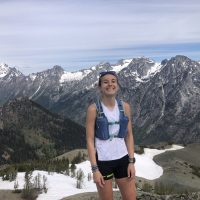
Kristina is a PhD student advised by Trevor Branch whose research is focused on North Pacific blue whales. She earned a BS in Environmental Science and Research Management from the University of Washington in 2019 with minors in Quantitative Science and Math. In 2021, she earned an MS in Web Mapping and Spatial Analysis from the University of Wisconsin. She is interested in quantitative analysis and modeling and applying her analytical skills broadly to ecological topics. Originally from Berkeley, California, the mountains in Washington have kept her put in Seattle. Outside of school and work, she is an avid trail runner and competes in ultras at a professional level. Throughout the week you can find her logging hours of work on the computer, but any chance she gets, you can find her logging hours off in the mountains!
Shorna Sabikunnahar
Shorna Sabikunnahar
- M.S., University of Dhaka
- Ecology
- Fish Nutrients
- Freshwater
- Human Health
- Toxicology
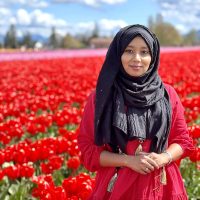
Hailing from Bangladesh, Shorna earned her M.S. degree at the University of Dhaka before starting her Ph.D. journey at SAFS in Fall 2020. Her research focuses on identifying the ecological and biological factors influencing variations in toxic metal concentrations and nutritional profiles within fish from Tonle Sap Lake, Cambodia. Furthermore, she is investigating the health risks to consumers posed by the consumption of fish contaminated with metals and evaluates whether nutritional requirements are being met.

Chris Setzke
Chris Setzke
- B.S. Biology, University of Wisconsin-Madison
- M.Sc. Biology, University of British Columbia
- Climate and Global Change
- Conservation
- Ecology
- Genetics and Genomics
- Statistics and Modeling
- Kerry Naish
Advisor:
Chris is originally from Southeastern Wisconsin and graduated from the University of Wisconsin-Madison in 2017 with a B.S. in Biology. There, he studied the phylogenetics of monkshood and dabbled in all kinds of research from Ecology to Astrobiology. After undergrad, Chris spent two years working in a medical lab studying the effects of asthma medication on sleep apnea risk. From there, he went to complete his M.Sc. in Biology at the University of British Columbia, where he studied the conservation genomics of kokanee in the Yukon. Following his graduation in 2021, he finally arrived at SAFS, where he now studies disease ecology and the genomics of disease resistance in salmonids.
Chris is passionate about teaching, the environment, and effective science communication. In his free time, he enjoys the outdoors, strumming on his guitar, playing sports, being social, and watching Wisconsin sports teams continuously disappoint.

Sarah Teman
Sarah Teman
- B.S. Wildlife Ecology and Conservation, University of Florida
- Conservation
- Physiology
- Wildlife Health
- Laidre Lab
Lab:
- Kristin Laidre
Advisor:
Sarah’s PhD research centers on understanding the health of polar bears in a changing climate. She studies polar bear nutritional and reproductive biomarkers, parasites and disease, and physiologic dysregulation. Her background is in marine mammal stranding response, rehabilitation, and health assessments. She has a BS in Wildlife Ecology and Conservation from the University of Florida and worked as research assistant for The SeaDoc Society, a flagship program of the UC Davis School of Veterinary Medicine. In her free time, Sarah volunteers in marine mammal rehabilitation at SR3.
Terrance Wang
Terrance Wang
- Climate and Global Change
- Resource Management
- Statistics and Modeling
- Ray Hilborn
- André Punt
Advisor: