Filter Results
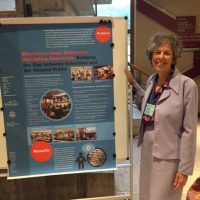
In 1980, I became the second woman to earn a PhD in fisheries at the UW. My program focused on water pollution ecology, emphasizing impacts of toxic chemicals on aquatic biota. I want to thank my dissertation committee, especially the late Dr. George Brown, who was the chair and a wonderful mentor, and Dr. Frieda Taub, who was also a wonderful mentor and an inspirational role model.
Read more
As the School approaches its centennial year (2019), we have been telling the stories of many of the important figures in SAFS’s development and evolution: deans, directors, faculty, and students. In fact, there have been many long-standing staff members who have played significant roles in helping SAFS become a major academic and research institution. Tom Oswold Jr. is one such long-term staff member.
Read more
I originally came to UW as an undergraduate and received a BS degree in Oceanography. I then worked in the Oceanography Department for several years, participating on oceanographic expeditions in Puget Sound, the tropical Pacific, and the Arctic and Antarctic regions. When I
decided to go back to school, I enrolled in the School of Fisheries to obtain a better background in quantitative science, population dynamics, and animal behavior.
It all started on a warm morning in the summer on the beach in my home country of Brazil when I was about 10 years old. I went for a walk with my father and three brothers when we came across a dead dolphin. It was a franciscana (scientifically known as Pontoporia blainvillei), one of the smallest cetaceans, and a species endemic to the western South Atlantic Ocean.
Read more
The University of Washington seemed like an odd choice for a kid from Tulsa, Oklahoma. However, after a visit to Seattle and the Pacific Northwest, I knew where I wanted to be. And, even though I was initially not accepted, the UW became home for nearly 15 years. And, Seattle has been home for 25 years.
Read more
I grew up in Alaska, with wilderness always at my fingertips and primed to study marine biology from my first undergraduate days at UW. Yet the transition to Seattle’s urban environment was challenging until I found a home at SAFS, where professors knew your name, your classmates were your allies, and learning was by experience. I started at UW as a biology major, but quickly learned that SAFS offered an educational intimacy unparalleled in other programs, and in 2003, I was proud to earn double BS degrees in Biology and Aquatic and Fishery Sciences.
Read more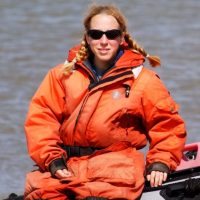
I didn’t start off a “dolphin hugger,” as they say in the field of marine mammal science, but rather came to appreciate the unique anatomical, physiological, behavioral, and ecological adaptations of marine mammals while pursuing my BS in Marine Biology at Texas A&M University at Galveston. There, I had an incredible mentor, Dr. Bernd Würsig, who was both world-renowned in this field and extremely supportive of students.
Read more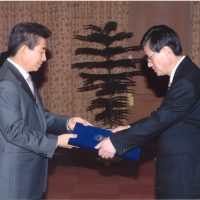
Chang-Ik Zhang started his studies at the University of Washington in 1981 and received a PhD in fisheries under Donald Gunderson in 1987. During his UW graduate studies, he received the Ellis Memorial Scholarship and the Anderson Memorial Scholarship. He was on the Dean’s List for 1985–1986 due to his academic achievements at UW. While a graduate student, he worked with classmates, Patrick Sullivan, now a professor at Cornell University, and Anne Hollowed, now at NOAA/Fisheries, writing scientific papers for publication and discussing scientific issues.
Read more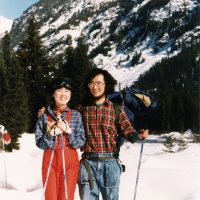
Suam Kim received his B.Sc (1976) and M.Sc. (1979) in the Department of Oceanography from the Seoul National University (Republic of Korea) and his PhD in fisheries oceanography in the School of Fisheries (now SAFS) in 1987. His main research interest at the UW, conducted in collaboration with scientists at the Alaska Fisheries Science Center, was the recruitment process for walleye pollock in the Gulf of Alaska.
Read more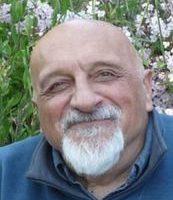
After graduating in Marine Biology from the University of Buenos Aires, I went to Patagonia to conduct research. My main interests were the management of the natural resources of the area, and I became involved in several projects. I realized that my training was not the right one to produce solid scientific answers to the questions of how much could be harvested sustainably and other issues relevant to most developing countries.
Read more