Community and connection with the Alaska Salmon Program

It’s not all work while visiting the Alaska Salmon Program camps for the summer field season. Students head up to southwest Alaska, some for over three months, and downtime is a chance to explore, connect with their peers, and experience living in a field camp.
Naomi Prahl
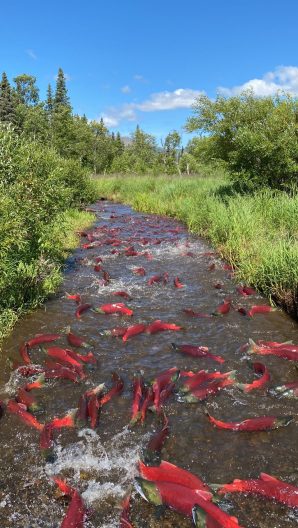
Lots of fish!

Some students are avid fishers and get to experience fishing in a location that vacationers usually pay a large sum to enjoy. Ryan Luvera, a SAFS and Marine Biology double major entering his third year, shared: “Outside of a typical workday I love to fish, and the fishing up here is truly world class.” 

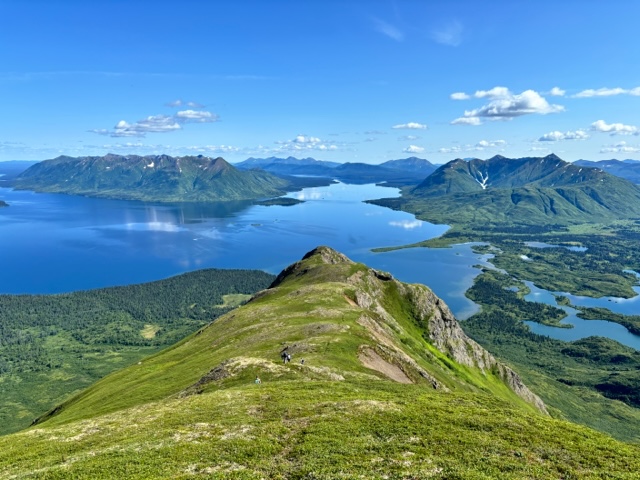
Whether you have visited the camps in person or only seen pictures, the location continues to be one that awes. Hiking Church Mountain, a familiar sight towering over the Lake Nerka field camp, is a tradition among those who spend time with the Alaska Salmon Program. “It was very steep but so worth it, both for the views and the sense of accomplishment. We got a bonus lesson on the history of glaciation in the valleys visible from the top. It was amazing to see the concepts physically laid out in the landscape,” Emma Meyer, a junior at SAFS, said. 

Some of the more subtle experiences are among the most memorable. “One of my favorite things to do was have lunch in the tundra,” said Callie Murakami, a SAFS major now in her third year. “Some days we packed lunches and snacks to have while we were out, and we would sit in the open tundra to eat. The ground was soft, there were crowberries and cloudberries growing everywhere, and we could all chat and take a break. Even in the rain, nothing could beat a tundra lunch.” 
Emma Meyer
A view from the top of Church Mountain.

Building a sense of community is a key part of the experience, from studying and working during the day, to pitching in for mealtimes and spending evenings together. “As a class, we all enjoyed each other’s company and would often play speed solitaire, cambio, and bananagrams in the evening after dinner,” shared Emma Bell, who will soon be graduating from SAFS. “One night we made popcorn and had a movie night which was also really fun.”

For many students, visiting Alaska is a highlight of their time studying at the University of Washington. “Last year I was at Friday Harbor Labs, and I thought that was going to be the peak experience of my college experience, and then I came to Aleknagik,” said Ryan Luvera. “This is truly an experience like no other, being able to be in living quarters with so many brilliant minds, I wish I could spend every summer here!”
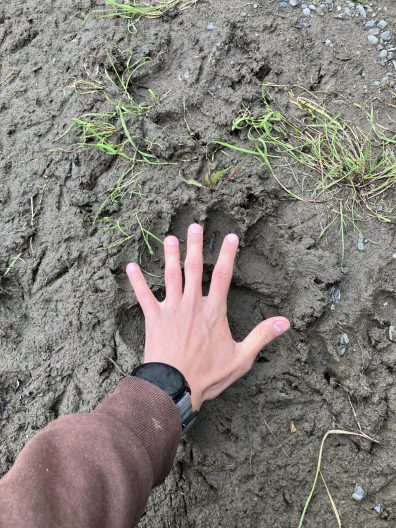
Ryan Luvera
Salmon are not the only wildlife in these parts!

For others, it’s an opportunity to see another side of the fishery that they have experience with. Naomi Prahl, a SAFS major going into her senior year, shared: “I work as a commercial fisherman in the Bristol Bay sockeye salmon fishery, which is the fishery that utilizes the ASP data for their management decisions. Working in the fishery gave me a first look at how incredible the Bristol Bay ecosystem is, and getting to be a student with ASP this summer felt like a full circle moment. I got to see the ‘behind the scenes’ of the fishing job that I love so much. There was something almost magical about getting to see the salmon in every life stage through the class this summer after working a fishing season beforehand.”

Putting into practice key skills learned throughout their academic journeys is a central part of the Alaska Salmon Program and sets students on course for a range of opportunities in the future, from further study in graduate programs to careers in academic institutions and fishery-related fields. “I learned a lot of valuable skills about field and professional work, such as preparation and flexibility when it comes to working in the field, and how to work and communicate better as a team,” shared Callie Murakami.

How do students find out about this opportunity to spend a summer in Alaska? “While I was attending community college my only intention after I graduated was to transfer to SAFS,” said Emma Bell. “I was constantly looking at the SAFS webpage and seeing all the cool opportunities they offered and thought that the Alaska Salmon Program seemed really incredible. When I saw the flier posted, I was so excited to fill out an application.”
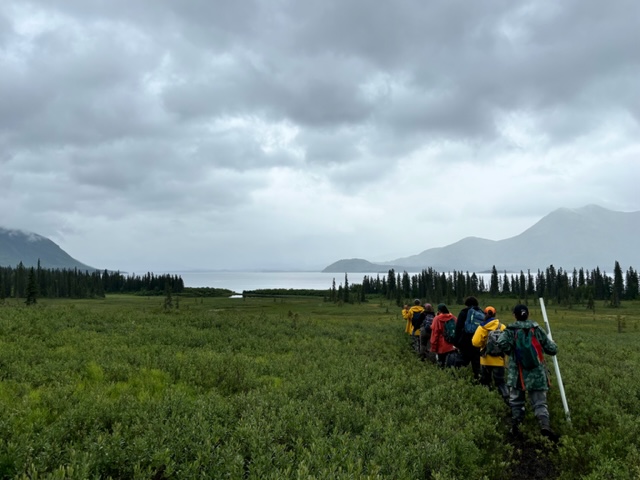
Emma Meyer
A trek through the tundra.

Hundreds of students from UW have spent time with the Alaska Salmon Program over the last few decades, immersing themselves in one of the world’s most remarkable ecosystems. For future students, Naomi Prahl shared some advice: “Just get excited. It’s such an incredible and unique opportunity and I think the way to appreciate it fully would be to dive in headfirst. Don’t hide your enthusiasm and share what you’re excited to learn about. When you get there, try everything. Don’t shy away from asking questions and trying things you have no experience with. Take full advantage of the learning opportunities presented.”
The return of the sockeye: Read Part 1 of the 2024 ASP blog series


Clicks not bricks: A global assessment of the online trade of ornamental crayfish

They may be small, but crayfish are mighty in other ways, one of them being invasive risk in areas where they are not natively found. A type of freshwater crustacean, crayfish are increasingly being traded online for ornamental purposes, such as aquariums. In a new study led by SAFS Professor Julian Olden and published on Sept. 9 in Conservation Biology, the first ever global assessment of the online trade in and associated invasion risk of freshwater crayfishes was conducted with co-author Francisco Carvalho from the University of Minho.

We are all familiar with the global pet trade, ranging from buying dogs and house cats to the trade in exotic pets and endangered species such as pangolins. But the trade in terrestrial species is not the only one occurring. The global pet trade, including aquatic species, constitutes a burgeoning pathway for the intentional introduction of non-native species, with 6-19% of hobbyists admitting to releasing unwanted aquarium animals into the wild on at least one occasion. Popular stories of released goldfish growing to the size of a football might be ringing a bell. Crayfish are another aquatic species increasingly traded via e-commerce over recent decades, presenting an invasive and biosecurity risk when released into the wild.

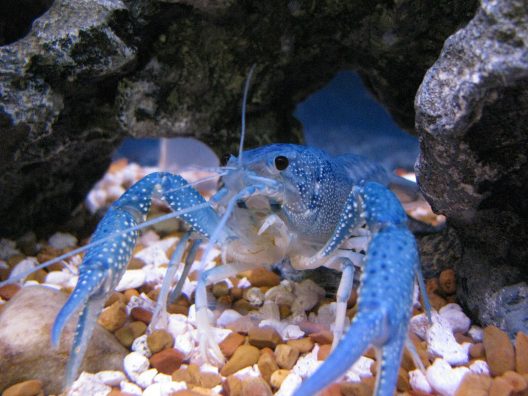
A blue crayfish in a freshwater aquarium. Crayfish are increasingly traded via e-commerce over recent decades, presenting an invasive and biosecurity risk when released into the wild.

Hot spots of invasion risk were identified in the new study as those areas facing both high frequency of listings offering shipment and favorable environmental conditions to support species establishment. By systematically examining e-commerce marketplaces in multiple languages, scraping information that included species identity, price, quantity, and shipping designation from each crayfish listing, the researchers revealed that the global crayfish trade involved online marketplaces in 33 countries spanning five different continents. Germany (17% of listings), the United States (13%), South Korea (9%), Russia (7%), and France (6%) were found to be the epicenters of online ornamental marketplaces, although the study found websites selling crayfish located across the globe.

Where are these crayfish ending up? Olden and Carvalho identified the major shipping routes with respect to the number of species offered and total listings. Germany (33 species with 34% of listings) and Spain (24 species with 8% of listings) were the major shippers to countries in Europe, with the United States to Canada another major route (15 species with 4% of listings). They also found that most marketplaces that shipped internationally were in Europe and Asia (81%), and the major trade routes occurred in Europe, particularly between EU countries.

Trade routes of the global online trade in ornamental crayfish for (a) all countries and (b) countries of Europe connecting online marketplaces selling ornamental crayfish to the potential destinations according to the shipping policies of online marketplaces (line thickness, proportional to number of listings from the origin country to the destination country; countries differentiated by color).

The geographic hotspots for invasive risk of non-native crayfish coincided with both elevated opportunities for introduction (greater shipping offerings) and establishment. Many options exist to tackle this issue, such as fortifying border inspections, enforcing current law, enhancing communication with the ornamental species industry, and encouraging humane disposal of unwanted ornamental species versus releasing into the wild. However, the shift of commerce away from brick and mortar to online clicks has posed many regulatory challenges to enforce these actions. Persistent gaps in understanding the online pet trade remain, but this study presents an important first step because the results illustrate the taxonomy, geography, and economics of the global online trade in ornamental crayfish.


Reflections on Tribal Fisheries and Co-Management 50 years after the Boldt Decision: Bevan Symposium

read the post-event blog here

The School of Aquatic and Fishery Sciences (SAFS) annually hosts the “Bevan Seminar on Sustainable Fisheries” funded by gifts from the Bevan family, and contributions from NOAA Fisheries and SAFS. This year, we will hold a one-day symposium on Thursday November 21, 2024, centered on Tribal voices, reflecting on the past 50 years and considering what the future of Washington fisheries will look like over the next 50 years.

Because of space constraints, only invited participants and individuals that pre-registered for the event will be able to attend. Please register here.

What was the Boldt Decision?

In his 1974 decision, Judge Boldt upheld Tribal treaty-reserved rights by:

  • Interpreting the treaty language, “The right of taking fish at usual and accustomed grounds and stations is further secured to said Indians in common with all citizens of the Territory…” to mean that the Tribes were entitled to half the harvestable number of salmon returning to or passing through the tribes’ usual and accustomed fishing places.
  • Establishing the Tribes as co-managers of the salmon resource with the state.
  • Established conservation standards that restricted the ability of the state to regulate treaty Indian fishing.

(Source: Understanding Tribal Treaty Rights in Western Washington, Northwest Indian Fisheries Commission).

To learn more, visit the Northwest Indian Fisheries Commission webpage on Treaties.

Event Details

  • When: Thursday November 21, 9:00 am – 6:00 pm
  • WhereAlder Hall Auditorium and Commons
  • What: Facilitated panel discussions featuring 15 + members of Washington State Tribes and other experts on Tribal fisheries management

Program

Panelist and Moderator Biographies

8:30: Registration Check In

9:00: Opening Session

  • Opening Prayer: Phil Hamilton, Muckleshoot Tribe
  • Welcome to UW and the Bevan Symposium: Tim Essington, Director, SAFS

9:15: Setting the Stage: The Stories – and People – Behind the Boldt Decision

  • Opening Remarks: Chairman Jaison Elkins, Muckleshoot Tribe
  • Scott Schuyler, Upper Skagit Tribe
  • Connie McCloud, Puyallup Tribe
  • Roger Fernandes, Lower Elwha S’Klallam Tribe
  • Boldt Decision 101 – a Legal Primer: Mary Neil. Lummi Nation. Attorney for Muckleshoot Tribe
  • Honoring Billy Frank Jr.

10:30 – 10:45: Break

10:45 – 12:15: Panel 1. Challenges, Successes, and Opportunities for Co-Management

Moderator: Cecilia Gobin, Tulalip Tribe, Northwest Indian Fisheries Commission

  • Maia Bellon, Cascadia Law Group
  • Phil Hamilton, Muckleshoot Tribe
  • Cleve Jackson, Quinault Nation
  • Jason Schaffler, Senior Quantitative Scientist for the Muckleshoot Tribe
  • Chet Tweed, Quinault Nation
  • Althea Wilson, Lummi Nation
  • Shawn Yanity, Stillaguamish Tribe

12:15 – 1:15: Lunch

1:15 – 2:45: Panel 2. Sustaining Tribal Fisheries for the Next 50 years 

Moderator: Julia Parrish, University of Washington

  • Vanessa Castle, Lower Elwha Klallam Tribe, Ridges to Riffles
  • Ron Charles, Port Gamble S’Klallam Tribe
  • Ed Johnstone, Quinault Nation. Chair, Northwest Indian Fisheries Commission;
  • Scott Schuyler, Upper Skagit Tribe
  • Tandy Wilbur, Swinomish Tribe

2:45 – 3:00 : Break

3:00 – 4:00: Panel 3. Tribal Fisheries’ Cultural Resiliency and Food Sovereignty during a Time of Climate Change

Moderator: Charlotte Coté, Tseshaht / Nuu-chaah-nulth

  • Micah McCarty, Makah Tribe
  • Connie McCloud, Puyallup Tribe

4:00 – 4:45: Q&A: Dos and Don’ts for Respectful Research Collaboration with Pacific NW Tribes

Moderator: Nicole Doran, University of Washington

  • Ashley Nicole Lewis, Quinault Nation

4:45: Closing Session

  • Phil Hamilton, Muckleshoot Tribe
  • Tim Essington, University of Washington

5:00: Reception in Alder Commons

The Bevan Symposium on Sustainable Fisheries is supported by the generous contributions from the Bevan Family and NOAA Fisheries.


Uncovering parasites in one of the world’s largest fish collections

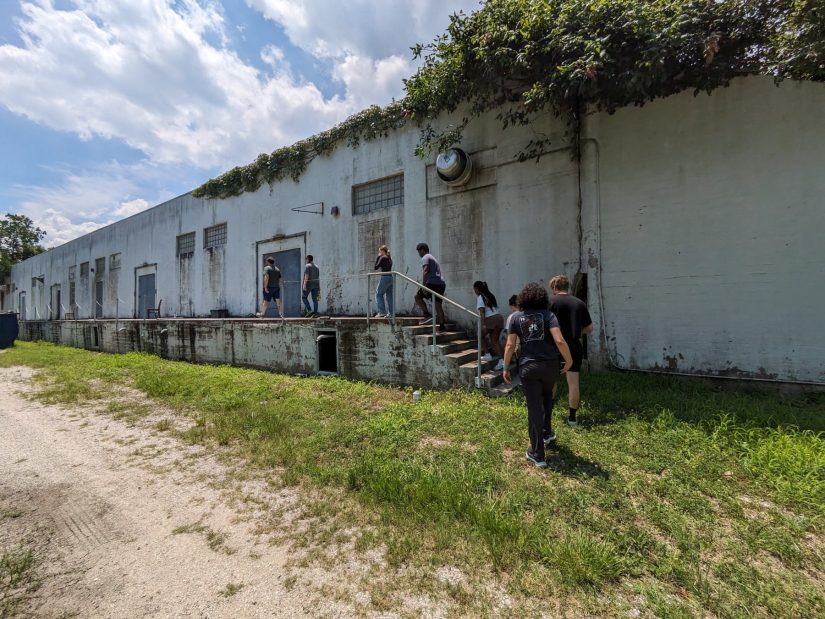
Housed in a set of World War II artillery bunkers on the outskirts of New Orleans is a surprising, and gargantuan, fish collection. Home to the largest collection of post-larval fish specimens in the world – 7 million to be precise – the Royal D. Suttkus Fish Collection at the Tulane University Biodiversity Research Institute (TUBRI) was the destination for a group of UW researchers over the summer.

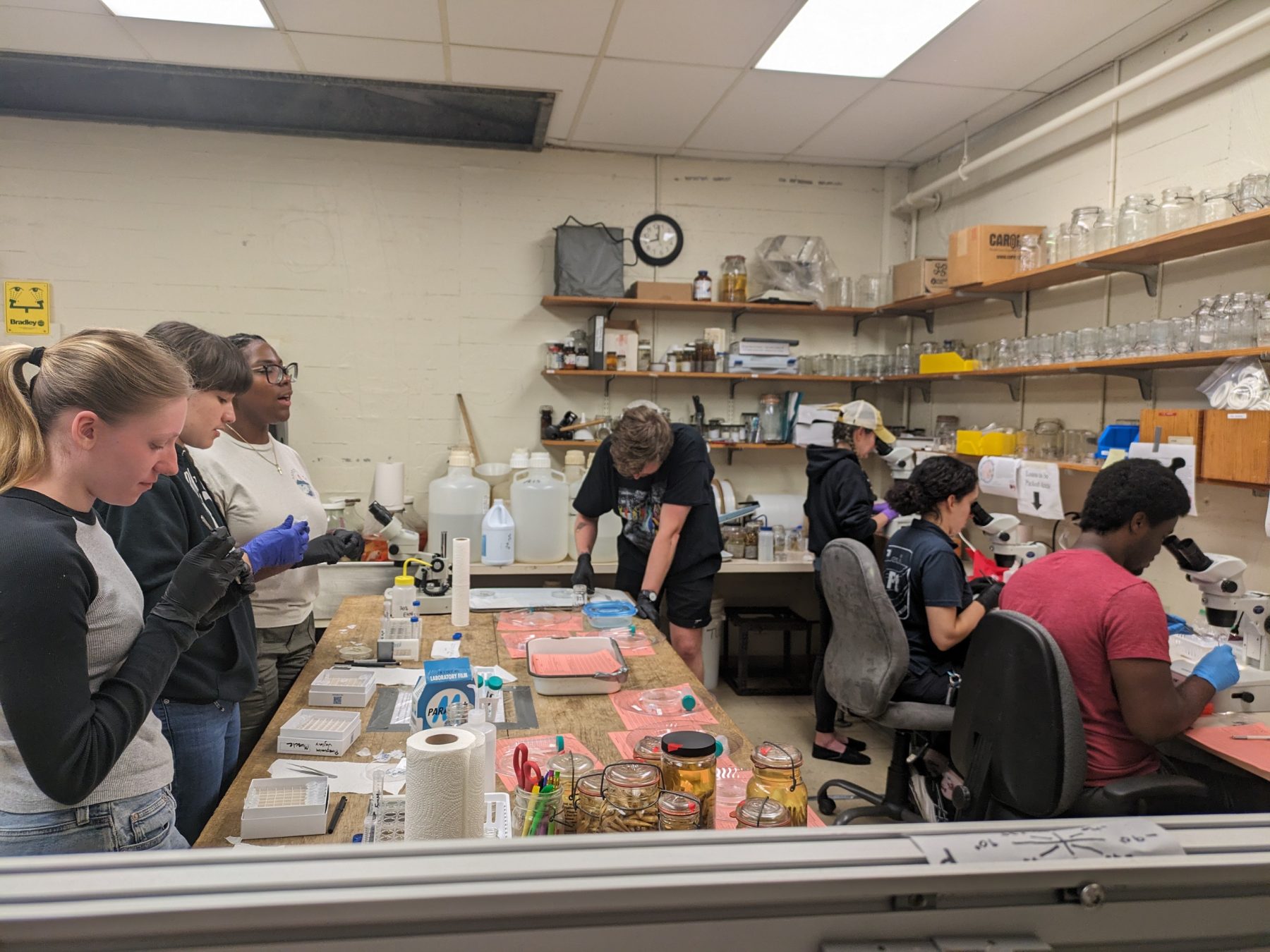
Led by Chelsea Wood, a parasitologist and Associate Professor at the School of Aquatic and Fishery Sciences, a team of eight undergraduates, graduate students, post-docs, and research technologists spent 10 weeks in New Orleans to collect the largest long-term dataset on parasites that exists for freshwater fish.

The team arrives for work at the Tulane University Biodiversity Research Institute, in the English Turn region of the Mississippi River, near Belle Chasse, LA.
Specimens of emerald shiner (Notropis atherinoides) originally collected from the Pearl River in 1971 float in a jar after being dissected and having their parasites counted and removed.

This is a shift away from the marine fishes that Chelsea usually works on, but no less fascinating. Interested in understanding how environmental change impacts the presence of parasites in wildlife, Chelsea and her team have been working with museums to develop long-term datasets by dissecting fish and inspecting their insides. “One of the things that makes the Tulane collection so special is how systematically the fish specimens have been collected over nearly half a century,” Chelsea shared.

“Some of these jars, which are organized in rows upon rows of shelving, hold thousands of individual fish collected from one place at one time,” she said. “They’re preserved so perfectly that as you look at them in the jar you can almost imagine them starting to swim. And this systematic, perfect preservation is invaluable for our parasite work, as the parasites are preserved right along with their host: the fish.”

One of the key questions driving the team’s work is: does pollution kill parasites or help them? “The Pearl River, which empties into the Gulf in New Orleans, has a lot of pollution inputs, including pulp mills, poultry farms and agricultural wastewater,” she shared.

A live tapeworm as seen through a stereomicroscope.

The team focused on seven fish species – Carpiodes velifer, Gambusia affinis, Hybognathus nuchalis, Ictalurus punctatus, Notropis atherinoides, Percina vigil, and Pimephales vigilax – chosen because they were common both above and below pulp mills, and before and after the Clean Water Act of 1972. “Due to the systematic sampling and preservation of fish above and below the pulp mills between 1963 and 2005, the Tulane fish collection is set up very well to help answer our questions,” Chelsea said. Setting their own lab record, her team dissected 1,200 fish in 10 weeks. “This was a fantastic outcome, and a true testament to the amazing team we had this year,” she added.

So, what did the team find out? Many things are too early to tell, but more than 36,000 individual parasites were found during dissection. One of the exciting things Chelsea highlighted about this project is its relation to other parasite datasets. “Our lab has learned a lot about how marine parasites change through time in response to things like climate change,” she said. “But we don’t know if what is true in marine environments also applies to freshwater fish or terrestrial animals. With this move to freshwater fish, it’s helping us to understand whether the kinds of change we’re seeing in marine fishes and their parasites are general or specific to marine ecosystems.”

REU intern and UW Marine Biology major, Jolee Thirtyacre, randomly selects fish for dissection from among several hundred in one jar.

Extending a special thanks to the team of scientists at Tulane, Chelsea shared that her team felt the welcoming spirit of New Orleans. “The TUBRI lab space is not huge, and our team of nine descended like an invading army. We are so grateful to Hank Bart, the current curator, Justin Mann who manages the collection, and all of the wonderful staff at TUBRI.”

“I like to describe this collection as a gift that’s been passed down through several generations of scientists,” Chelsea added. “Now we get to discover what’s been going in the fish housed here, many of which were collected before any of my research team, including me, were born!”

Funded through the National Science Foundation (NSF), Chelsea’s team included four members of the Wood Lab: Gabriella (Gabby) Commisso, Dakeishla (Daki) Diaz-Morales, Katie Leslie, and Connor Whalen, plus four undergrads whose participation was supported by the NSF Research Experience for Undergraduates (REU) program: Desmond Boyd (University of South Carolina), Shyanne Christner (Valdosta State University, Imani Jones (Tuskegee University), and Jolee Thirtyacre (University of Washington).

Director of the Tulane University Biodiversity Research Institute Hank Bart teaches SAFS graduate students Gabby Commisso and Connor Whalen how to seine fish near Pools Bluff Sill, Bogalusa, LA.

“Each member of team is leading the charge on their own part of the data analysis,” Chelsea said. “Daki is working on how multiple stressors combine to influence parasites, Gabby is looking at how the parasites of invasive hosts respond to environmental change, and Connor is investigating how parasites respond to extreme weather events, which are common in this region.” This project is part of a larger effort that will continue with a field expedition to Albuquerque, New Mexico, next summer.

For the undergrads, this was an incredible research experience which gave a real insight into how team science works. “Our undergrads were spectacular, moving their research projects forward at a pace we didn’t expect. From conducting their own statistical analyses in R, to learning and using GitHub, to finishing off poster presentations at the end of the summer, it was incredible to watch them take to this research like ducks to water,” Chelsea said.

What can we expect from the Albuquerque project in 2025? “It turns out that fish collections from urban areas are uncommon, and that’s where the Museum of Southwestern Biology, based at the University of New Mexico, is unique,” Chelsea shared. “We will be developing a time series of parasite burden starting from the 1920s, which spans before and after the urbanization of Albuquerque, and we’ll be looking above and below stream that brings stormwater into the Rio Grande.”

Stay tuned for 2025!

The team after seining fish near Pools Bluff Sill, Bogalusa, LA. From left to right: SAFS graduate student Connor Whalen, REU intern and UW Marine Biology major Jolee Thirtyacre, REU intern Shyanne Christner (Valdosta State), Director of the Tulane University Biodiversity Research Institute Hank Bart, SAFS postdoc Daki Diaz Morales, SAFS graduate student Gabby Commisso, SAFS professor Chelsea Wood, REU intern Imani Jones (Tuskegee University), REU intern Desmond Boyd (University of South Carolina).

Watch the video from their trip to New Orleans


Three faculty job ads now live!

SAFS is hiring for three tenure-track faculty jobs, which have been posted on interfolio. See the links below for more information and applications for each position.

Assistant Professor Freshwater Ecology

Apply here: http://apply.interfolio.com/154393

Assistant or Associate Professor in Pacific Salmon ecology, evolution, & management

Apply here: http://apply.interfolio.com/154403

Associate or Full Professor in Applied Organismal Biology & Aquaculture and Executive Director of the Western Regional Aquaculture Center

Apply here: http://apply.interfolio.com/154407


Putting on a show: SAFS drone program demonstrates research for congressional staff

On August 16, congressional staff from the State of Washington gathered for a drone demonstration located at the Taylor Shellfish Farm near Olympia, led by the Marine Landscape Ecology Lab (MLEL), based at the University of Washington School of Aquatic and Fishery Sciences.

Corey Garza
Congressional staff from the State of Washington gathered for a UW research drone demonstration.

Demonstrating the basics of how drones fly and collect data during marine ecosystem research, Corey Garza, SAFS Professor and Associate Dean for Diversity, Equity and Inclusion at the UW College of the Environment, shared with the group how his team uses drones to study the marine ecosystems that make up Puget Sound and further afield. From kelp forests to wetlands, drones are a critical piece of technology used to research marine landscapes such as these.

Part of a broader effort to demonstrate the breadth of coastal research being conducted within the UW College of the Environment, staffers also got the chance to try their hand at flying the drone as part of the demonstration.

In attendance were the following staffers: Sean Connell (Rep. Larsen), Steven Klausner (Sen. Murray), Amy Linhardt (Rep. Gluesenkamp Perez), Sara Develle (Rep. Strickland), Courtney Acoff (Rep. Kilmer), Kei Fujisawa (Rep. Schrier), Patrick Eckroth (Sen. Cantwell), Hanna Albert (Sen. Cantwell), Hunter Wade (Rep. Schrier), Ryan Blue (Rep. Kilmer).

Corey Garza
Staffers got to try their hand at flying at drone during the event.

For the demonstration, Corey showed how drones are supporting shellfish aquaculture in Washington as part of a collaborative new project with the Pacific Shellfish Institute, of which Taylor Shellfish is one of the partners. Present at the demonstration were: UW Marine Biology undergrad Ashley Rendon, UW College of the Environment Associate Dean for Administration Stephanie Harrington, Deputy Director of Federal Relations for UW Sang Han, Katie Houle and Bobbi Hudson from the Pacific Shellfish Institute, and Bill Dewey from Taylor Shellfish.

Interested in other stories featuring UW drone research?


The return of the sockeye: a summer with the Alaska Salmon Program

It’s all in the name: the Alaska Salmon Program. Each year, students from the University of Washington head up to southwest Alaska, part of a 75-year-old program dedicated to all aspects of the ecology and evolution of Pacific salmon in the watersheds of western Alaska, the Bering Sea, and the Gulf of Alaska.

Ryan Luvera
During 2024, eight students joined the Alaska Salmon Program at the camps nestled in the Wood River system.

You may be familiar with the Alaska Salmon Program (ASP) and its critical role in producing data and knowledge for managing and conserving regional ecosystems and their fisheries. But we’re doing a deeper dive into the role of students in the program, focusing on the opportunities for immersive learning and discovery they have when at the field camps, and the bonding experience with both fellow students and instructors during their time in Alaska.

In the 2024 summer field season, eight students headed up to the ASP camps based in the Wood River system. Nestled among Lake Aleknagik and Lake Nerka – which are two of five interconnected lakes which drain via the Wood River into the Nushagak River – are the camps students call home for a month or so, living and breathing fishery science.

Emma Bell, a community college transfer student who is about to graduate with a bachelor’s in Aquatic and Fishery Sciences from SAFS, remarked that the view from the dining area was unbeatable. “Sitting in the main house and looking out the sliding glass door every day was one of my favorite parts. Being able to unplug a bit from the real world and just sit with the beauty of Alaska was something I really needed.”

Emma Bell
The unbeatable view of Lake Aleknagik from the field camp.

Undergraduates visit Alaska as part of the AERA class (Aquatic Ecological Research in Alaska), supported by graduate students, field technicians, staff and professors. And a unique part of the class is that it goes hand-in-hand with fieldwork, where students can put into practice the knowledge, concepts, and skills they learn. For Ryan Luvera, a SAFS and Marine Biology double major about to enter his third year at UW, connecting key concepts and real-world applications was vital: “Learning so much about Bristol Bay and the ecosystem at large was a highlight for me. I feel like my view of nature has changed completely with all the knowledge I’ve gained, largely from the professors in the AERA class, and knowledge that you gain from being able to experience the scenery firsthand.”

Callie Murakami
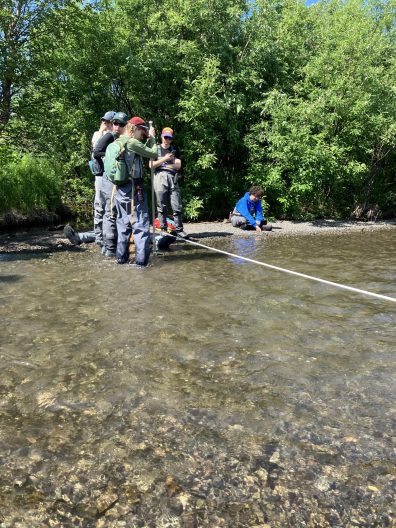
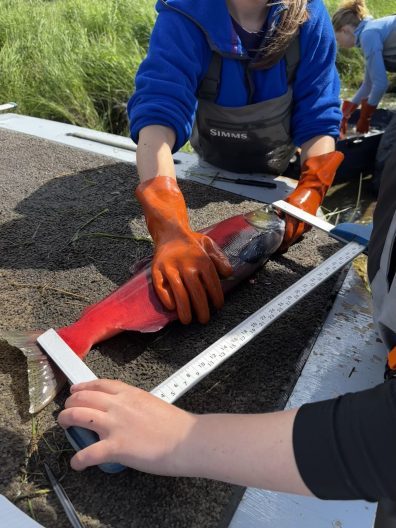
Measuring length and fin clip sampling live salmon on Whitefish Creek.

So what does a day in the life of a student with the Alaska Salmon Program look like? “Days varied, but generally we were up and ready to go at 9am,” said Emma Meyer, a junior at SAFS. “We would go to the classroom for a few hours of lectures before heading out to the field. Fieldwork could range from measuring sediment size to sampling juvenile salmon to collecting otoliths. In the afternoon, we caught up with assignments before dinner, then have some downtime.”

By the start of July, millions of sockeye salmon return to the lakes and rivers where ASP students are studying. “The field was incredible, and it was amazing to be out there seeing all the salmon day in and day out,” shared Emma Bell. “We talk a lot about salmon in Washington and in our classes at SAFS but actually standing in a stream where thousands of sockeye are spawning really puts things in perspective for you.”

Emma Bell
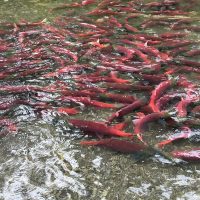
Millions of sockeye salmon return to the lakes and rivers where ASP students study during the summer.

Building up skills that will set students in good stead for future studies and careers involving fishery science and fieldwork is a vital goal of the Alaska Salmon Program. “There was no better way to learn than to be out in the field with your professors,” shared Callie Murakami, an Aquatic and Fishery Sciences major going into junior year. “It was one thing to be taught in the classroom by all the amazing researchers but being outside with them and asking questions about the salmon, streams, and surrounding environment while we were right there in it was so much more memorable and a lot more hands-on. I loved when we were out in the field collecting data and chatting.”

Spending so much time in the field also provides a unique chance for students to build confidence in themselves. “What I didn’t expect was how much my confidence in myself increased,” said Emma Meyer. “As a transfer student, I had some moments of imposter syndrome during my first year at UW, where I felt behind in my scientific and academic background, but I found that I was more than capable. I learned how to collaborate with my peers, and the program helped me to see that we’re not competing and that there’s a place for everyone as long as we’re willing to learn from each other.” 

But it’s not all work! Stay tuned for our next blog where we hear from students about their downtime in Alaska, what community living in a field camp involves, and how students found out about the opportunity to spend a month in Alaska.

Emma Meyer
Two undergraduate students – Yajaira Ponce and Ryan Luvera – beach seining in Alaska.